
Cast Iron Steak: Sear, Baste, Rest for a Steakhouse Crust at Home
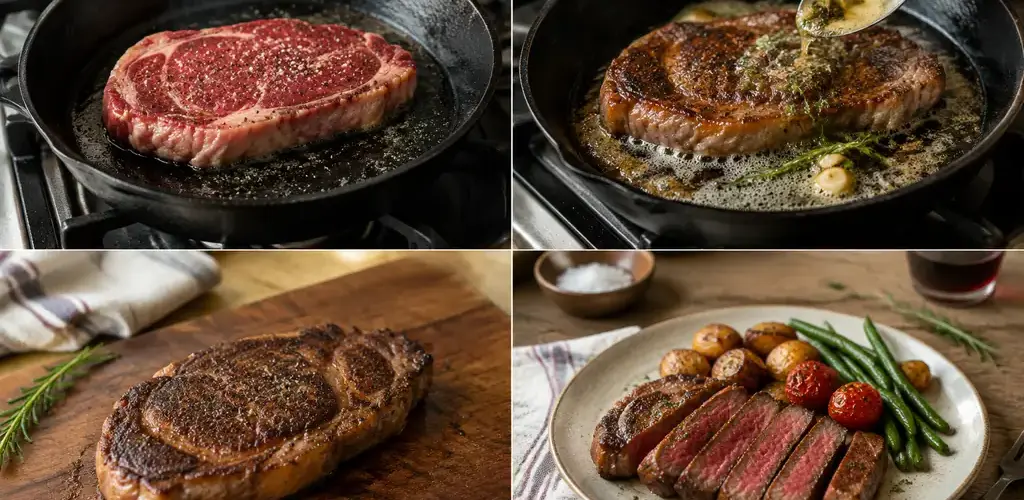
Cooking a steak in cast iron gives you a dark, even crust because the heavy pan holds heat and does not drop temperature when cold meat lands on it. The method is simple: dry the surface, get the pan properly hot, sear both sides, baste with butter and aromatics, then rest the meat before slicing. A skillet that weighs a few pounds does most of the work for you.
Contents
Why Cast Iron Works for Steak
Cast iron is dense, so it stores a large amount of heat and releases it into the meat instead of cooling down the moment the steak touches the surface. That stored heat builds a brown crust and helps prevent a grey, steamed exterior. Stainless steel and carbon steel behave in a similar way, but cast iron is cheap, forgiving, and found in most kitchens.
The pan also tolerates very high heat, which is exactly what a good sear needs. You can move it from the stovetop straight into an oven, so a thick cut finishes cooking through without burning on the outside. That oven step matters for anything much thicker than your palm.
A cast iron skillet stays hot for a long time after you take it off the burner. Keep a dry towel or a silicone sleeve nearby and never grab the handle bare-handed.
What You Need Before You Start
Gather everything first, because once the pan is hot you will not want to walk away.
- A cast iron skillet large enough to hold the steak without crowding
- Tongs, a sturdy pair that grips a heavy cut
- A thin metal spatula or a fish turner
- Paper towels for drying the meat
- Neutral oil with a high smoke point, such as grapeseed or avocado
- Butter, garlic cloves, and a few sprigs of thyme or rosemary
- Kosher salt and coarse black pepper
- An instant-read thermometer, the single most useful tool here
If your steak is frozen, thaw it overnight in the refrigerator. A cold centre cooks unevenly and steams the surface before it can brown.
How to Cook a Steak in a Cast Iron Skillet
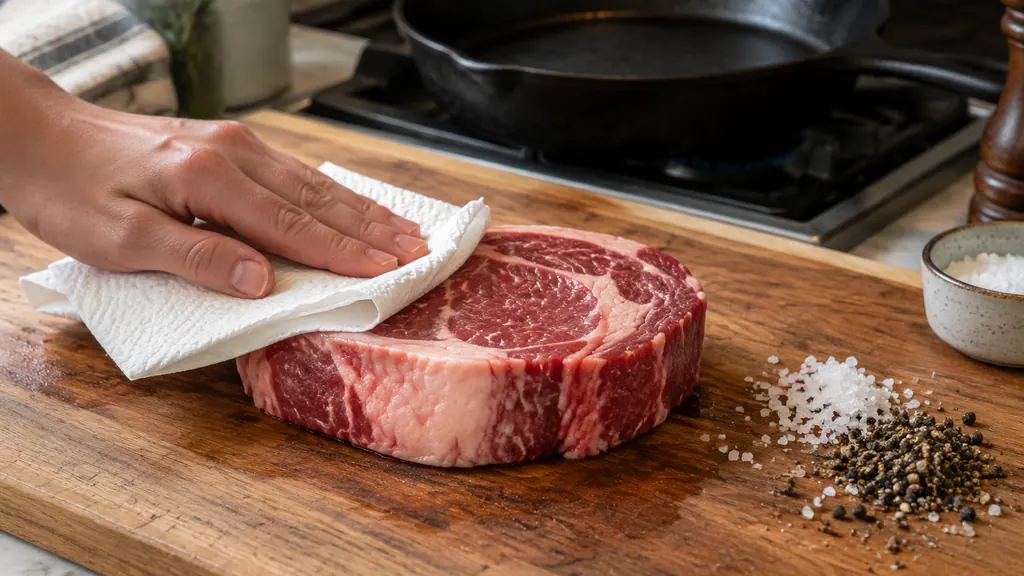
- Take the steak out of the refrigerator about half an hour ahead and pat it completely dry with paper towels. Any surface moisture turns to steam and blocks browning.
- Season both sides generously with kosher salt and coarse pepper. If you have time, salt it earlier and let it sit uncovered in the refrigerator so the surface dries further.
- Set the dry skillet over medium-high heat and let it come up slowly. Cast iron heats unevenly at first, so give it several minutes to even out.
- Add a thin film of neutral oil once the pan is hot. It should shimmer and move easily, not smoke heavily.
- Lay the steak in the pan away from you and press it flat for a second or two so the whole surface makes contact. Do not move it.
- Sear undisturbed for a few minutes until a deep brown crust forms, then flip once with tongs and sear the second side.
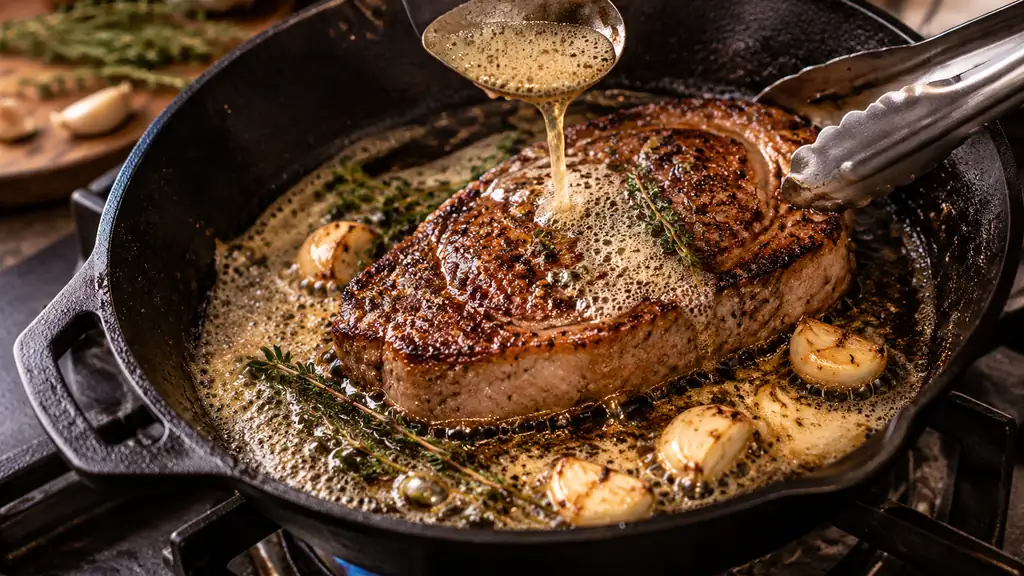
- Lower the heat, add butter, smashed garlic, and herb sprigs, then tilt the pan and spoon the foaming butter over the steak repeatedly for about a minute.
- Check the internal temperature with your thermometer, then move the steak to a board or rack and rest it before slicing.
For a thick cut, finish it in a hot oven after the first flip. Leaving it on the burner can char the crust before the middle is done. Check the spec sheet for your cut’s target temperature, since preferences vary and food safety guidance is worth following.
The Sear, the Baste, and the Rest
A dry surface, a hot pan, and a thin layer of oil produce the Maillard reaction, the browning that creates most of the flavour. Crowding the pan or moving the steak around drops the surface temperature and can leave the meat grey.
Once the crust is set, foaming butter carries heat into the meat and picks up the flavour of garlic and thyme. Tilt the pan and spoon continuously so the butter keeps moving. Butter burns quickly at high heat, so lower the flame before you start.
As the steak rests, juices redistribute through the muscle fibres. Rest a thin cut for several minutes and a thick one for longer. Tent it loosely with foil if the kitchen is cold. A tight wrap softens the crust.
Slicing, Serving, and Cleaning Up
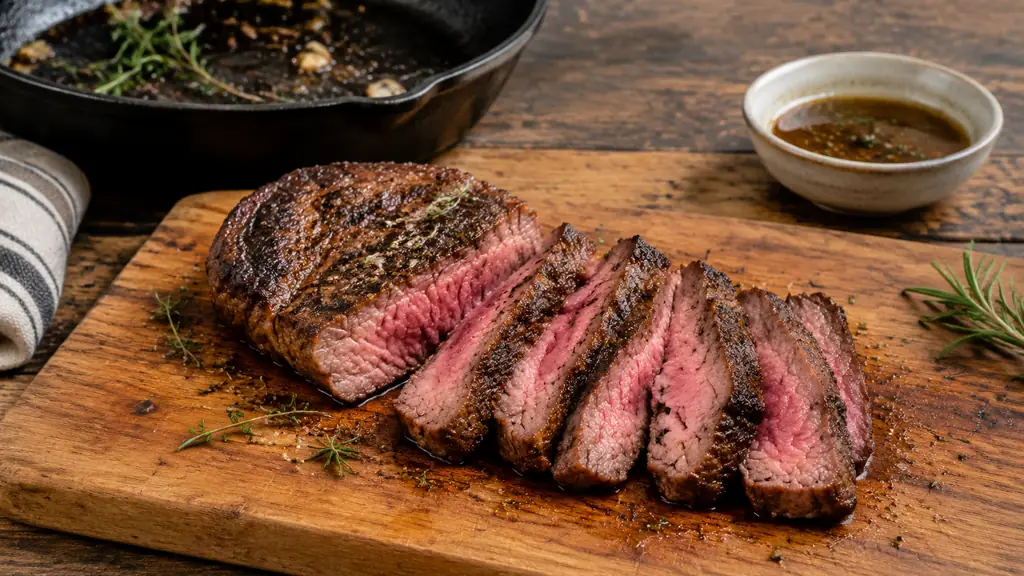
Always slice against the grain. Look at the direction the muscle fibres run and cut across them, which shortens them and makes each bite more tender. For a large cut, cut it into two pieces first, then slice each piece across the grain.
Spoon any board juices back over the meat. A simple pan sauce made from the browned bits and a splash of stock or wine uses what is already in the pan.
Clean the skillet while it is still warm but cool enough to handle. Scrape it with a stiff brush or a plastic scraper, rinse with hot water, dry it thoroughly on the stove, then wipe a very thin layer of oil across the cooking surface. Skip the dishwasher and skip long soaks, both of which damage the seasoning you have built up.
The habits in this guide to saving time when cooking carry over to quicker meals. Making cooking fun and easy again starts with a simple process. Cast iron also handles vegetables, so roasted eggplant can share the same pan and heat.
Common Mistakes to Avoid
- A cold or wet steak. Both steam the surface and stall the crust.
- Too little fat in the pan. A thin film of oil is the minimum for even contact.
- Moving the meat around. Leave it alone until the crust releases on its own.
- Starting the butter too early. It scorches before the steak is browned.
- Skipping the rest. You lose the juices you worked to keep inside.
- Slicing with the grain. It makes even a tender cut chewy.
When to Call It Done and When to Adjust
Use a thermometer to check doneness, especially with a thick cut. Press the meat with tongs as well, since a firm steak is a done steak and a springy one is still rare. If the crust is browning faster than the centre is cooking, move the pan to a lower rack in the oven or lower the burner.
If your smoke alarm goes off every time, your oil is past its smoke point. Switch to a higher smoke point oil or open a window and use a splatter screen. A little smoke is normal with cast iron, a lot of acrid smoke means the heat is too high.
Cast Iron Steak FAQ
Do I need to preheat the skillet for a long time?
Yes, longer than you would with a thin pan. Cast iron heats slowly and unevenly, so give it several minutes over medium-high heat before the steak goes in. A properly preheated pan holds its temperature when cold meat lands on it.
Should I use butter or oil for the sear?
Use a neutral high smoke point oil for the sear and add butter later for the baste. Butter alone burns at searing temperatures, but once the heat is lowered it adds flavour and colour that oil cannot match.
How do I stop the steak from sticking?
Dry the surface, get the pan hot, and use a thin film of oil. A steak that sticks usually went into a pan that was not hot enough, or it was moved before the crust had formed and released naturally.
Can I cook a frozen steak in cast iron?
A frozen centre can mean the outside overcooks before the middle thaws. Thaw overnight in the refrigerator. If cooking from frozen, use lower heat and a longer oven finish.
How long should the steak rest?
A few minutes for a thin cut and longer for a thick one, roughly enough time to set the table. Rest it on a board or rack, loosely tented, so the crust stays crisp and the juices redistribute.



No Comments