
Chicken Spaghetti Recipe the Whole Family Finishes
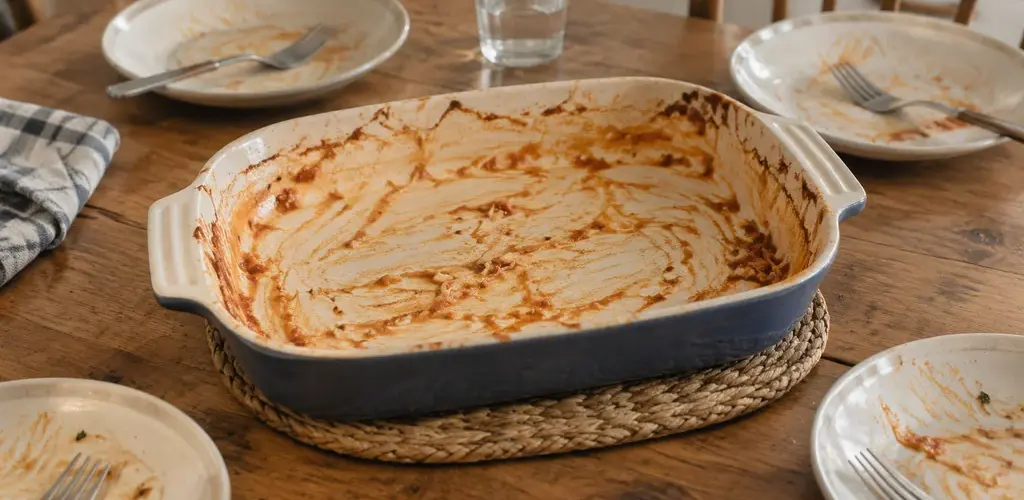
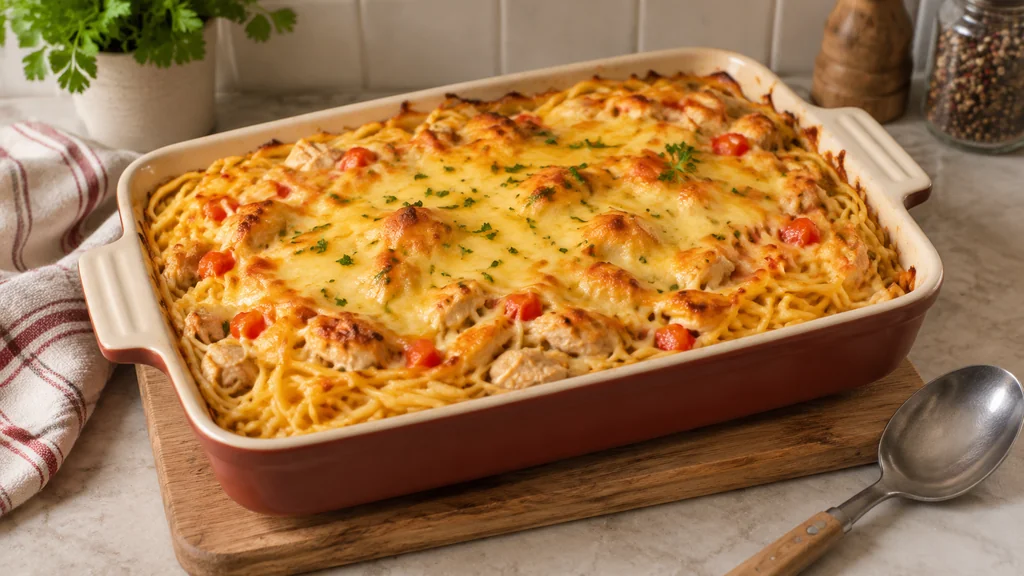
Chicken spaghetti is a creamy, cheesy pasta bake that combines shredded cooked chicken, spaghetti, and a from-scratch sauce made with butter, flour, milk, and melted cheese. The recipe feeds a crowd, holds up well in the fridge, and is mild enough that picky eaters clean their plates. This version uses pantry staples and one pot for the pasta, so cleanup stays manageable.
Contents
Why This Chicken Spaghetti Recipe Works for Picky Families
The biggest hurdle with family dinners is getting everyone to eat the same thing. This recipe for chicken spaghetti uses a smooth cheese sauce with mild seasoning, so kids who turn their noses up at anything green will still eat a full bowl. The vegetables are diced small and cooked until soft, so they blend into the sauce and are less noticeable on the plate.
The cheese sauce is the key. A simple roux of butter and flour, whisked with whole milk and melted Cheddar or a mild melting cheese, gives you a silky base that clings to every strand of pasta. Sharp cheese can overwhelm younger palates, so a medium Cheddar or a Monterey Jack blend suits this dish. If you want more punch, set out grated Parmesan and crushed red pepper at the table and let adults add their own.
Spaghetti itself is a forgiving pasta. It is most commonly sold in lengths of 25–30 cm (10–12 in) according to Wikipedia, which means a standard box fits neatly in most stockpots and bakes evenly in a rectangular casserole dish once broken in half. A spaghetti measure can portion out 1, 2, 3 or 4 servings using circles of different diameters, which takes the guesswork out of scaling the recipe up or down depending on how many people are at the table.
One more reason this dish earns a spot in the rotation: it reheats beautifully. That makes it a reliable choice for households where schedules never quite line up.
Ingredients and Tools You Need
The ingredient list is short and mostly shelf-stable. That makes this recipe for chicken spaghetti practical for weeknight rotations.
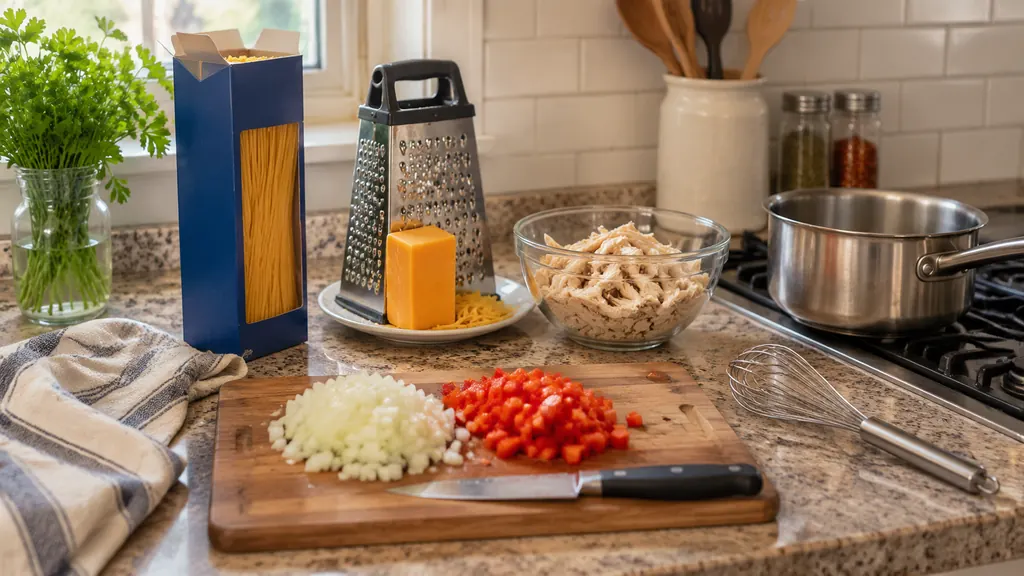
For the pasta and chicken:
- Spaghetti, enough for the number of servings you are making
- Cooked chicken, shredded or diced (rotisserie chicken, leftover roast, or poached breast meat all work)
- Salt for the pasta water
For the sauce:
- Butter
- All-purpose flour
- Whole milk or a milk-and-stock blend
- Mild melting cheese such as Cheddar, Monterey Jack, or a packaged blend
- Diced onion, bell pepper, and celery, cooked until soft
- Garlic, salt, black pepper, and a pinch of paprika
- A splash of chicken stock to loosen the sauce if it tightens too much
Tools:
- A large stockpot for the pasta
- A deep skillet or saucepan for the sauce
- A whisk
- A colander
- A rectangular baking dish
- A box grater or a bag of pre-shredded cheese
If you are using raw chicken breasts instead of leftover meat, bake them first so the pasta dish comes together quickly at the end. The oven temperature and timing matter more than most people expect, and a thermometer takes the doubt out of it. My guide to baked chicken breast oven temp and timing covers the numbers and helps keep the chicken juicy during the bake.
Shredded rotisserie chicken is the fastest option and adds seasoning the way plain poached breast does not. If you cooked a whole bird or have leftover thighs, pull the meat and chop it roughly. Dark meat stays tender in the casserole and holds more flavor than white meat alone, so a mix of both is a good approach.
A note on cheese. Pre-shredded bags are convenient, but they are often dusted with anti-caking agents that can make a sauce grainy. Grating a block of Cheddar or Monterey Jack on a box grater takes a few minutes and gives you a smoother melt. If you only have the bagged kind, it still works, but stir it in off the heat so it does not seize.
Step-by-Step Chicken Spaghetti Pasta Recipe
This is the main method. It takes about the time it takes to boil pasta plus a few minutes for the sauce and the bake. Read through once before you start so the steps flow.
- Cook the spaghetti. Bring a large pot of salted water to a boil. Add the spaghetti and cook until just shy of al dente, a minute or two under the package time, because it will finish cooking in the oven. Reserve a cup of the pasta water before draining.
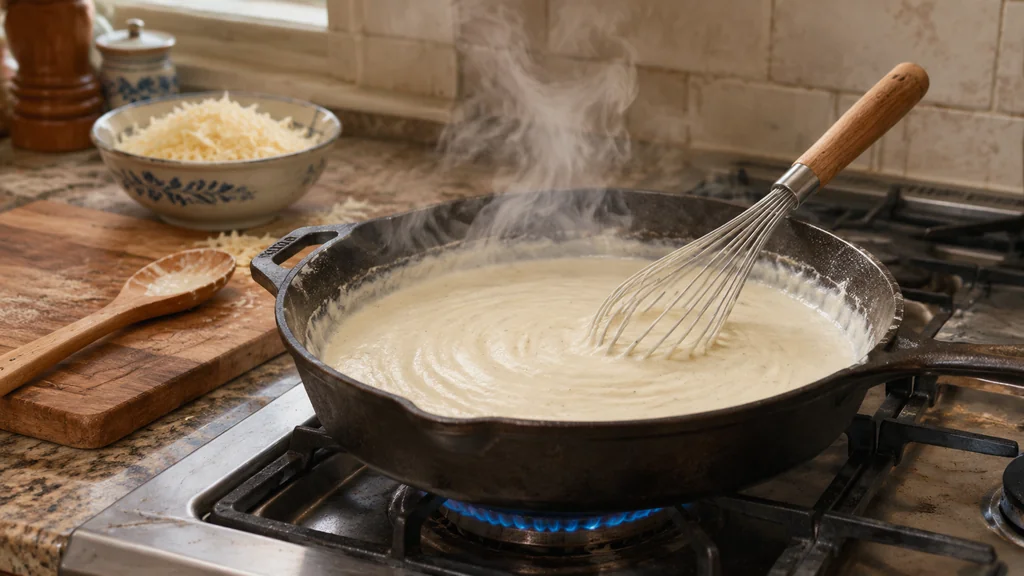
- Make the sauce base. In a deep skillet, melt the butter over medium heat. Add the diced onion, bell pepper, and celery and cook until soft, then stir in the flour and cook for a minute or two so the raw flour taste cooks out.
- Whisk in the milk. Pour the milk in slowly while whisking so no lumps form. Simmer until the sauce thickens enough to coat the back of a spoon, then season with garlic, salt, pepper, and paprika.
- Melt in the cheese. Take the pan off the heat and stir in the grated cheese until it melts smoothly. If the sauce tightens too much, loosen it with a splash of the reserved pasta water or stock.
- Combine everything. Add the shredded chicken and the drained spaghetti to the sauce and toss until every strand is coated. Taste and adjust the salt.
- Bake. Turn the mixture into a buttered baking dish, top with extra cheese, and bake until the sauce bubbles at the edges and the top turns golden. Let it rest for a few minutes before serving so the sauce sets.
- Serve. Portion into bowls and set out Parmesan, crushed red pepper, and a green salad on the side.
The rest before serving matters more than it sounds. A casserole straight from the oven is loose and runny. Five minutes on the counter lets the sauce thicken and cling to the pasta.
If you scale the recipe up, use a wider, shallow dish. A deep dish means the center takes longer to heat through while the edges dry out. Two smaller dishes bake more evenly than one oversized one, and you can freeze the second for another night.
Make-Ahead, Storage, and Reheating Tips
This chicken spaghetti pasta recipe is built for planning ahead. You can make the sauce and cook the chicken a day in advance, then assemble and bake on the night you need it.
For freezer meals, assemble the casserole up to the baking step, cover tightly, and freeze. Thaw it in the fridge overnight before baking so the center heats evenly. A frozen solid casserole dropped straight into a hot oven will brown on top long before the middle is hot.
Reheat single portions in the microwave with a tablespoon of water or milk, covered, so the pasta steams and stays moist. For a larger amount, warm it covered in the oven at a low temperature and stir once halfway through.
If you have cooked chicken left over from another meal, this dish is a good place to use it. The same idea works with a cold chicken salad if you want something for lunch the next day; my collection of chicken salad recipes for lunch and potlucks has options that hold up well in a cooler.
Variations and Substitutions
The base recipe is flexible, and small swaps keep it interesting without breaking the family-pleaser rule.
- Different pasta shapes. Rotini, penne, or farfalle all hold sauce well and are easier for small children to spear with a fork. Cook them to the same just-shy-of-done stage.
- Different cheese. Monterey Jack melts smoothly, Gruyère adds depth for adult palates, and a smoked Cheddar gives the bake a campfire note that older kids tend to like.
- Extra vegetables. Frozen peas stirred in at the end add color and sweetness without much chopping. Mushrooms and spinach work too if your crowd accepts them.
- Canned pantry meat. If you keep canned pork or ham in the cupboard, the same creamy pasta method adapts to a different protein. My notes on canned pork recipes show how to work pantry meat into baked dishes like this one.
- Spice level. A pinch of cayenne in the sauce or crushed red pepper at the table lets each person set their own heat.
When you swap ingredients, keep the sauce-to-pasta ratio roughly the same. Too little sauce and the bake turns dry; too much and it turns soupy. If you add a lot of vegetables, add a little extra sauce to compensate for the moisture they release.
Common Mistakes to Avoid
Most disappointing chicken spaghetti comes down to a few avoidable errors.
The first is overcooking the pasta. Spaghetti cooked to full tenderness in the pot turns mushy after the bake. Pull it a minute or two early and let the oven finish the job.
The second is adding cheese over high heat. Cheese that boils can turn stringy or grainy, so stir it in off the heat and let the residual warmth melt it.
The third is skipping the seasoning step. A cheese sauce tastes flat if it is not salted properly, and the pasta water only seasons the noodles. Taste the sauce before it goes into the dish and adjust.
The fourth is under-resting the bake. Give it a few minutes on the counter before serving so the sauce sets.
If you are watching nutrition labels, keep in mind that the USDA branded foods database stopped receiving new food component information from Label Insight after November 16, 2023, so older packaged-goods data may not reflect current reformulations. Cooking from scratch with whole ingredients sidesteps that problem, since you control what goes into the pot.
When to Call It a Potluck Dish Instead
This recipe scales well enough to feed a crowd, which makes it a natural for church suppers, school events, and family gatherings. Double the sauce and pasta, bake in two dishes, and bring one hot and one cold if the event has a long serving window. The dish holds heat well under foil and does not separate as it sits.
For potlucks, keep the toppings separate so guests can add their own. A small bowl of grated Parmesan, a shaker of crushed red pepper, and a dish of chopped parsley let people customize without slowing the line.
Chicken Spaghetti FAQ
How long does chicken spaghetti last in the fridge?
The sauce improves overnight as the flavors settle. Reheat portions covered with a splash of milk so the pasta steams back to a creamy texture.
Can I make chicken spaghetti ahead of time?
Yes. You can also freeze the unbaked casserole and thaw it overnight in the fridge before it goes in the oven.
What cheese melts best in a chicken spaghetti sauce?
Monterey Jack and medium Cheddar melt smoothly into a cheese sauce without turning grainy, and a blend of the two gives both creaminess and flavor. Stir the cheese in off the heat so it melts gently and stays smooth.
Can I use leftover chicken or rotisserie chicken?
Shredded rotisserie chicken or leftover roast chicken works well and saves the step of cooking raw meat. About two generous handfuls of pulled meat per baking dish is a good starting point, and you can adjust to taste once the sauce and pasta are combined.
Why does my chicken spaghetti turn out dry?
Dry chicken spaghetti usually means too little sauce for the amount of pasta or an overlong bake. Reserve some pasta water to loosen the sauce, keep the pasta slightly undercooked before baking, and pull the dish from the oven as soon as the sauce bubbles at the edges.



No Comments