
Beef and Broccoli Recipe Better Than Takeout
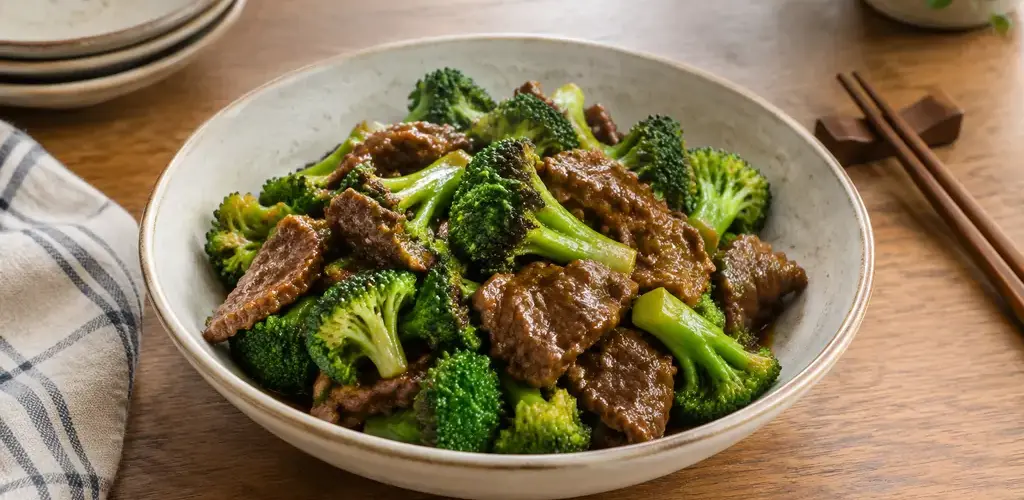
The secret to a beef and broccoli recipe that beats takeout is velveting the beef in a little cornstarch and soy sauce before it ever hits the pan, then stir-frying everything over the highest heat your stove can produce. Restaurant woks run hotter than most home burners, so you compensate with small batches, dry broccoli, and a sauce that thickens in seconds. Get those three things right and the dish comes out glossy, tender, and fast.
Contents
- Why Takeout Beef and Broccoli Tastes Different
- The Velveting Step Most Recipes Skip
- Choosing and Prepping the Broccoli
- Building a Sauce That Clings
- How to Cook Beef and Broccoli Step by Step
- Tools and Substitutions That Work
- Mistakes That Ruin the Dish
- When to Skip the Wok and Order In
- Beef and Broccoli FAQ
Why Takeout Beef and Broccoli Tastes Different
Restaurant kitchens velvet the meat. That means a brief marinade in cornstarch, a splash of soy sauce, sometimes a little egg white, which coats every slice and holds moisture through the heat of a commercial burner. Home cooks usually skip this step and end up with beef that turns gray and chewy.
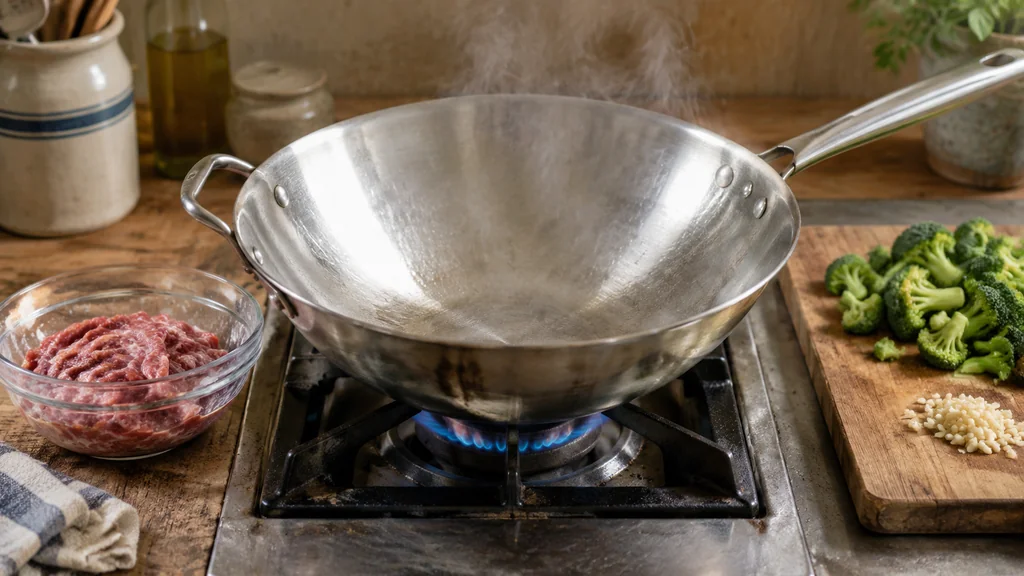
The second difference is heat. A commercial wok burner pushes far more energy than a residential gas range, and that intensity is what gives stir-fry its blistered edges and toasted aroma. You cannot buy that burner, but you can work around it.
The third difference is the sauce. Takeout sauce is often thin and sweet because it sits in a steam tray. A good homemade version clings to the food instead of pooling at the bottom of the container.
The Velveting Step Most Recipes Skip
Velveting is the single highest-return change you can make. Slice the beef against the grain into thin strips, then toss it with cornstarch, soy sauce, a splash of water, and a teaspoon of oil. Let it sit while you prep everything else.
The cornstarch does two jobs. It seals the surface so the meat steams gently in its own juices for the first few seconds of cooking, and it later helps the sauce thicken without a heavy slurry. This is standard technique across Chinese kitchens from Guangzhou to San Francisco.
A richly marbled American Wagyu strip can be sliced thin and velveted, though flank steak or sirloin works well too.
Choosing and Prepping the Broccoli
Broccoli is mostly water, and water is the enemy of a hot pan. Cut the crowns into even florets, then dry them thoroughly on a clean towel. Any droplet left on the surface will drop your pan temperature the moment it lands.
Two approaches work well:
- Blanch first. Drop the florets into boiling water for a short spell, then shock them in ice water and drain. This guarantees a tender-crisp texture and shortens the time they spend in the wok.
- Stir-fry raw. Cook the florets in the hot pan with a splash of water and a lid for a minute, then uncover and let the edges char. Faster, and it keeps more of the fresh flavor.
Either way, cut the stems into coins and peel any tough outer skin. The stems are sweet and crunchy, and throwing them away wastes half the vegetable.
Building a Sauce That Clings
A takeout-style sauce needs salt, sweetness, acidity, and body. The body comes from cornstarch, and the rest is a balance you tune to taste.
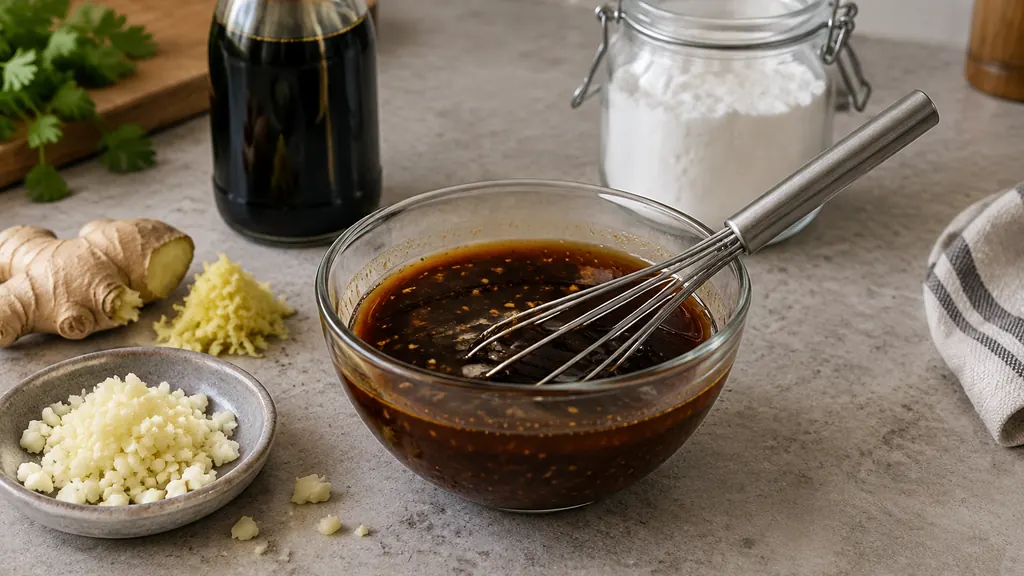
Whisk together soy sauce, a little dark soy for color, oyster sauce, a spoon of brown sugar, rice vinegar, grated ginger, minced garlic, and a cornstarch slurry. Mix it in a bowl before the pan gets hot, because once the beef goes in you will not have a free hand.
Sesame oil goes in at the very end, off the heat. Toasted Sesame oil is aromatic and turns bitter when it burns, so treat it as a finishing touch rather than a cooking fat. The same logic applies to any flavored oil you might reach for.
How to Cook Beef and Broccoli Step by Step
- Freeze the beef briefly. A short spell in the freezer firms the meat so you can slice it paper-thin against the grain.
- Velvet the slices. Toss with cornstarch, soy sauce, water, and a little oil. Rest while you chop the vegetables.
- Mix the sauce. Whisk all sauce ingredients in a bowl and set it beside the stove.
- Sear the beef in batches. Get the pan smoking hot, add oil, and spread the beef in a single layer. Leave it undisturbed for a moment, then stir until just barely cooked. Remove it to a plate.
- Cook the broccoli. Add the florets to the same pan with a splash of water, cover briefly, then stir-fry until bright green and charred at the edges.
- Add aromatics. Toss in garlic and ginger for a few seconds until fragrant, taking care not to scorch them.
- Return the beef and add sauce. Pour the sauce down the side of the pan, stir constantly until it thickens and coats everything, then finish with sesame oil.
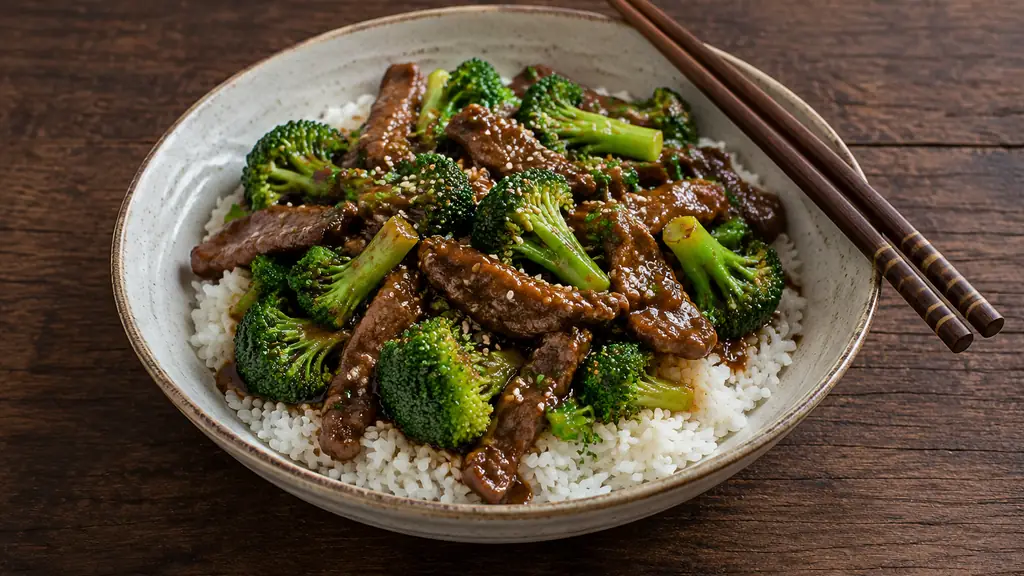
- Serve immediately. Spoon it over steamed Jasmine rice and top with toasted sesame seeds.
Crowding is the most common failure. If the beef overlaps in the pan it steams instead of searing, and you lose the texture you worked for. Cook it in two batches even if it takes an extra minute.
Tools and Substitutions That Work
A carbon steel wok, wide cast iron skillet, or heavy stainless pan works well. Preheat it thoroughly, and use kitchen shears to trim the florets. Chicken thigh, pork tenderloin, shrimp, and firm tofu also work with the marinade and sauce. For a different beef cut, see this guide to American Wagyu beef. Snap peas, bell peppers, or baby bok choy can replace half the broccoli. A crispy tortilla bowl guide covers shaping and baking an edible vessel.
Mistakes That Ruin the Dish
- Wet broccoli. Dry it or it will steam and go limp.
- A cold pan. If the beef does not sizzle the instant it lands, take it out and wait longer.
- Too much sauce. A little goes far once the cornstarch activates. Start small and add.
- Overcooking the beef. It keeps cooking off the heat. Pull it early.
- Stale aromatics. Jarred garlic that has sat in the fridge for months tastes flat. Use fresh when you can.
When to Skip the Wok and Order In
Some nights delivery is the simpler option. If you have no exhaust fan, a weak electric coil burner, or thirty minutes total, takeout wins on logistics. The homemade version wins on cost, control, and the fact that you can dial the sugar and salt to your own taste.
A well-stocked pantry makes the difference. Soy sauce, oyster sauce, cornstarch, rice vinegar, and sesame oil keep for a long time, so the only fresh items you need are the beef, the broccoli, and the aromatics. Once those are in the fridge, this becomes a fifteen-minute dinner.
Pair the meal with something cold and simple. A crisp lager or a light cocktail from this list of popular cocktails works nicely, and both cut through the salty-savory sauce without competing with it. For a bourbon option, see this Bourbon and Coke ratio guide.
Beef and Broccoli FAQ
What is the best cut of beef for stir-fry?
Flank steak and sirloin are the classic choices because they slice cleanly and stay tender when cooked fast. Skirt steak works too. Whatever you buy, slice it against the grain, which shortens the muscle fibers and makes each bite easier to chew.
Why is my beef and broccoli sauce watery?
Either the pan was not hot enough when the sauce went in, or you added too much liquid at once. Cornstarch needs heat and a brief simmer to thicken. Add the sauce in a steady stream while stirring and let it bubble for a moment before judging the texture.
Do I need a wok to make this recipe?
No. A wide skillet with a heavy base gets you most of the way there. The key is surface area and retained heat, so choose your widest pan and preheat it thoroughly. A flat-bottomed wok is a nice middle ground if you have one.


No Comments