
Orange Chicken at Home: A Crispy Chicken and Orange Recipe
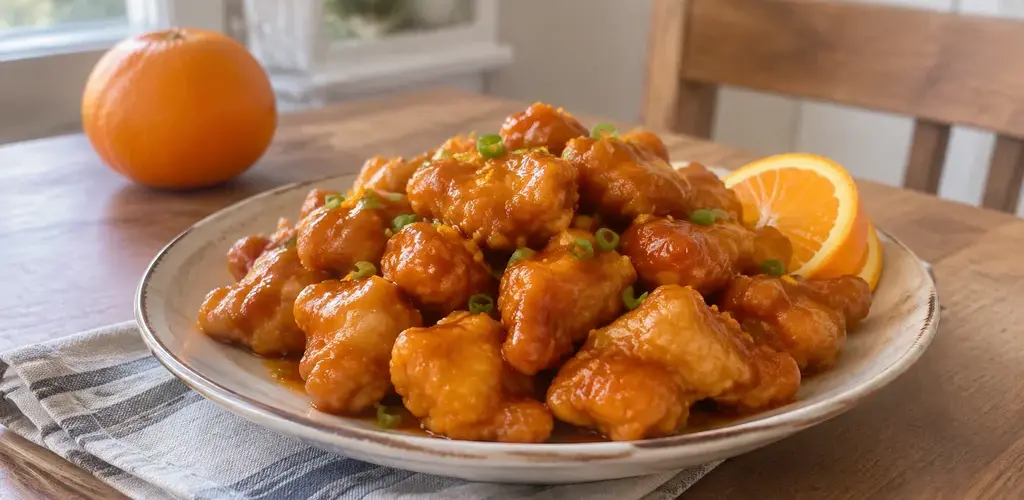
Orange chicken at home is a weeknight dish built from crispy bite-size chicken tossed in a sweet-tangy orange sauce that thickens on the stove in minutes. The home version skips the deep fryer and the long ingredient list. You crisp the chicken, simmer the sauce, and combine the two at the end so the coating stays crunchy.
Contents
What Orange Chicken Actually Is
Orange chicken is a Chinese-American takeout dish. Chunks of battered, fried chicken get tossed in a sticky sauce flavored with orange, sugar, vinegar and soy. It sits somewhere between sweet and sour chicken and General Tso’s, with citrus doing the heavy lifting.
The dish is closely tied to American Chinese restaurant chains, and it has become one of the most-ordered items on those menus. Panda Express alone sells over 100 million pounds of it every year, according to Wikipedia’s entry on the dish. That volume tells you something useful for cooking at home. The appeal is the contrast between a crunchy crust and a glossy, clinging sauce, and that contrast is what you are trying to reproduce in your own kitchen.
Restaurant versions usually start with dark meat chicken in a thick batter, fried in oil at high heat. Home cooks rarely want to manage a pot of hot oil on a Tuesday night. The good news is that a crisp-coated shortcut gets you most of the way there, and the sauce is the part that actually carries the flavor.
If you already cook chicken often, this recipe fits neatly into your rotation. The techniques overlap with the ones in these baked, fried and air fried chicken tenders, which cover coating and heat management in more detail.
The Shortcut Version That Works on a Weeknight
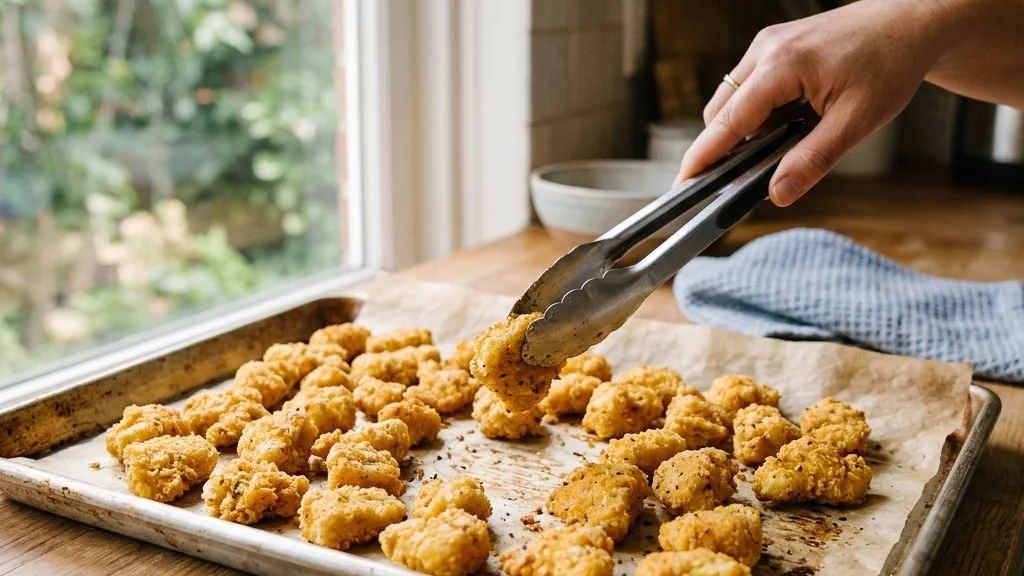
The fastest route to orange chicken at home uses frozen popcorn chicken. A standard recipe calls for 16 ounces of frozen popcorn chicken, about 4 cups, baked or air fried until crisp. That gives you the crunch without batter, oil disposal or a splatter guard.
Popcorn chicken works because the pieces are already bite-size and evenly coated. You get the ratio right without doing any knife work. Bake it on a sheet pan or run it through the air fryer while you make the sauce, and the timing lines up naturally.
If you have leftover cooked chicken instead, the swap is straightforward. Cut leftover chicken breast or thighs into 1-inch cubes and use those in place of the popcorn chicken. The texture will be softer, since there is no crust, but the sauce still coats well and the dish comes together even faster.
A few things to look for when buying the frozen chicken:
- Plain or lightly seasoned popcorn chicken, not heavily sauced or glazed
- A brand you have cooked before, so you know how it browns
- Pieces that are roughly uniform in size, so they crisp at the same rate
Check the package for bake or air fry times. Ovens and air fryers vary a lot, and the spec sheet on the bag is the most reliable guide you have.
Building the Orange Sauce
The sauce is where a chicken and orange recipe earns its name. You want three things balanced: sweetness, acidity and a savory backbone. Orange juice and zest bring the fruit, sugar or honey brings the sweetness, and rice vinegar or lemon juice brings the sharpness that keeps it from tasting flat. Soy sauce or a pinch of salt supplies the savory note.
Zest matters more than most people expect. The zest holds the aromatic oils, and the juice alone tastes thin by comparison. Use a Microplane or the fine side of a box grater and take only the orange part, leaving the white pith behind because it turns bitter.
For heat, a recipe might call for 1/4 teaspoon crushed red pepper flakes or 1/2 teaspoon minced fresh ginger. Either one adds a background warmth without turning the dish spicy. Use both if you like a little more bite, and taste the sauce before the chicken goes in.
Here is the order that keeps the sauce smooth:
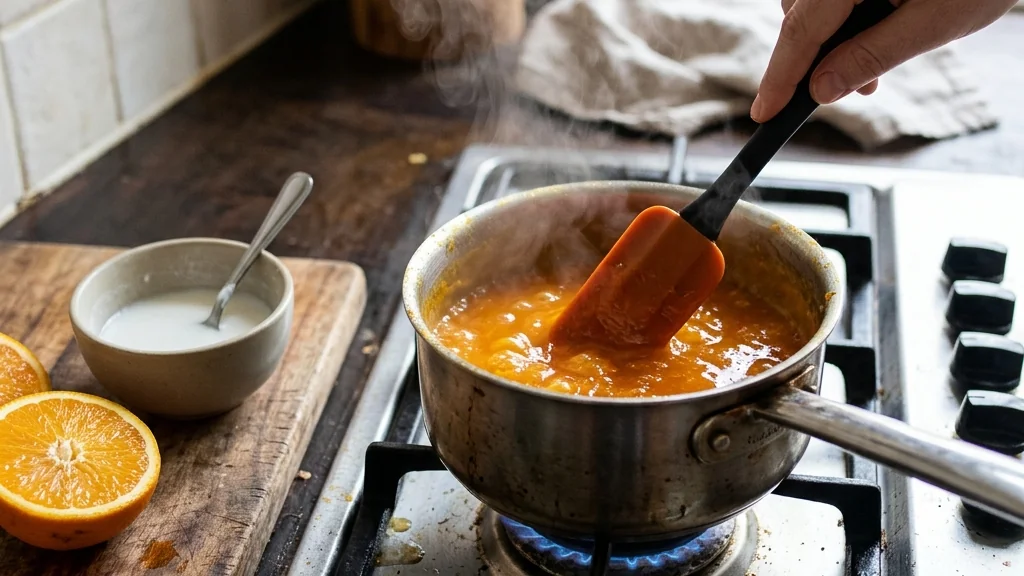
- Whisk the orange juice, zest, sugar, vinegar and soy sauce in a small bowl.
- Warm the mixture in a saucepan over medium heat until the sugar dissolves.
- Mix 1 tablespoon cornstarch with 1 tablespoon water in a separate cup.
- Stir the slurry into the simmering sauce and cook until it thickens and turns glossy.
- Taste and adjust with more vinegar for sharpness or a little sugar for roundness.
The cornstarch slurry is the workhorse here. Cornstarch thickens without flour’s raw taste, and it gives the sauce that clear, shiny look you associate with takeout. Mix it with cold water first. Adding dry cornstarch straight to a hot pan makes lumps that never smooth out.
Getting the Texture Right
Soggy orange chicken is the most common home failure, and it almost always comes down to timing. Sauce that sits on crisp chicken for ten minutes will steam the crust soft. The fix is to combine them at the very last moment, toss quickly, and serve immediately.
Keep the sauce hot and the chicken hot when they meet. If the sauce has cooled while the chicken baked, warm it back up first. A brief toss in a hot pan or a bowl with a lid works better than stirring, because stirring crushes the coating.
Watch the thickness of the sauce too. A sauce that is too thin runs to the bottom of the bowl and leaves the chicken bare. One that is too thick clumps and coats unevenly. Aim for the consistency of warm honey, thick enough to cling to a spoon but still fluid. If it tightens too much off the heat, loosen it with a splash of orange juice or water.
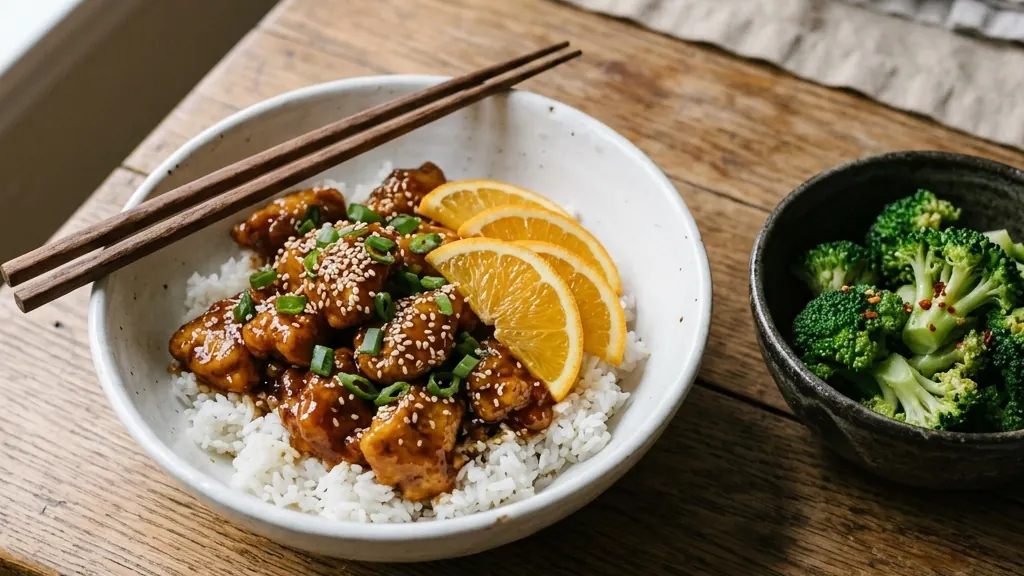
Serve it over steamed rice or noodles so the extra sauce has somewhere to go. A vegetable alongside, like broccoli or snap peas, balances the sweetness.
Smart Swaps and Additions
The popcorn chicken base is flexible, and you can push the dish in several directions without changing the method.
For a lighter version, use the air fryer for the chicken and cut the sugar in the sauce by a third. The orange zest and vinegar still carry the flavor, giving the dish a brighter taste with less sweetness. Air frying also keeps the kitchen cooler in summer.
For a saucier result, double the sauce batch. Extra sauce is welcome over rice, and it gives you room to toss generously without worrying about running out.
For a different protein, the same sauce works on shrimp, tofu or pork. Cook the protein separately and crisp it, then toss at the end. The sauce does not care what it is coating.
If you cook a whole bird and have meat left over, the rotisserie chicken plan here shows how to stretch one chicken across several meals, and orange chicken is a natural fit for the second night. Cubed leftover meat takes the sauce well, and the dish comes together in the time it takes to make rice.
Breakfast cooks who like a project might enjoy the brunch ideas in this collection of morning recipes, though orange chicken itself is firmly a dinner dish.
Mistakes to Avoid
The biggest mistake is saucing too early. Toss at the end, every time.
The second is skipping the zest. Juice alone gives you sweetness without the aromatic orange flavor that defines the dish.
The third is under-thickening the sauce. If you pour it over the chicken and it pools, the coating absorbs it and softens. Cook the slurry in until the sauce visibly thickens.
The fourth is overcrowding the pan. Whether you bake or air fry, the chicken needs space for air to circulate. Pile it up and the pieces steam each other.
The fifth is overseasoning. Soy sauce, the seasoning on the frozen chicken and any added salt stack up fast. Taste the sauce before it goes near the chicken and adjust from there.
When to Skip the Shortcut
If you want the full restaurant experience, batter and fry the chicken yourself. Use a simple flour and cornstarch coating, fry in oil at a steady temperature, and drain on a rack so the bottom stays crisp. It takes longer and uses more oil, but the crust is noticeably better.
For most weeknights, though, the popcorn chicken version delivers the flavor with a fraction of the effort. The sauce is the part people remember, and that part is entirely under your control.
Orange Chicken at Home FAQ
How much popcorn chicken do I need for four servings?
A standard batch uses 16 ounces of frozen popcorn chicken, about 4 cups. That amount serves roughly four people once it is tossed with sauce and served over rice. Scale up if you want leftovers, and double the sauce along with the chicken.
What thickens orange chicken sauce?
Cornstarch is the standard thickener. Mix 1 tablespoon cornstarch with 1 tablespoon water and stir it into the simmering sauce. Cook briefly until the sauce turns glossy and coats a spoon. Flour works in a pinch but leaves a slightly cloudy sauce and a faint raw taste if undercooked.
How do I add heat to orange chicken?
Use 1/4 teaspoon crushed red pepper flakes or 1/2 teaspoon minced fresh ginger in the sauce. Both add warmth without overwhelming the orange. Taste after they go in and add more if you want a stronger kick.
Why did my orange chicken turn soggy?
The coating softened because the chicken sat in the sauce too long. Toss the crisp chicken with hot sauce at the very last moment and serve immediately. A sauce that is too thin also soaks in, so cook the cornstarch slurry until it visibly thickens before combining.


No Comments