
Baked Chicken Breast: Oven Temp, Timing and Thermometer
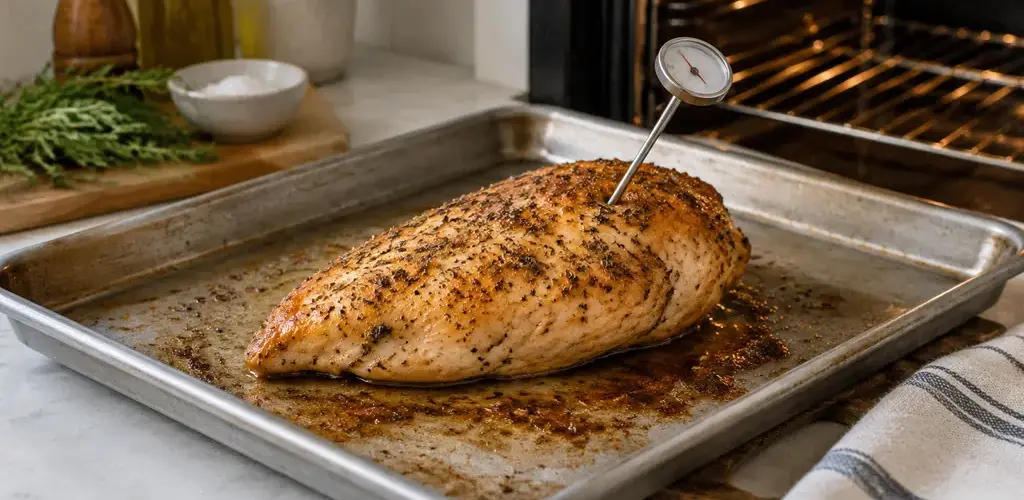
Baked chicken breasts come out juicy when you roast them until cooked through. Cooking time depends on thickness, so use a food thermometer to check the thickest part. Timing is a guide, but the thermometer is the decision-maker. Get those two things right and you will never serve a dry, chalky breast again.
Contents
Why the Thermometer Beats the Clock
Oven thermostats can drift, and breast thickness varies from a thin cutlet to a plump half. A clock cannot account for either variable, but a thermometer can.
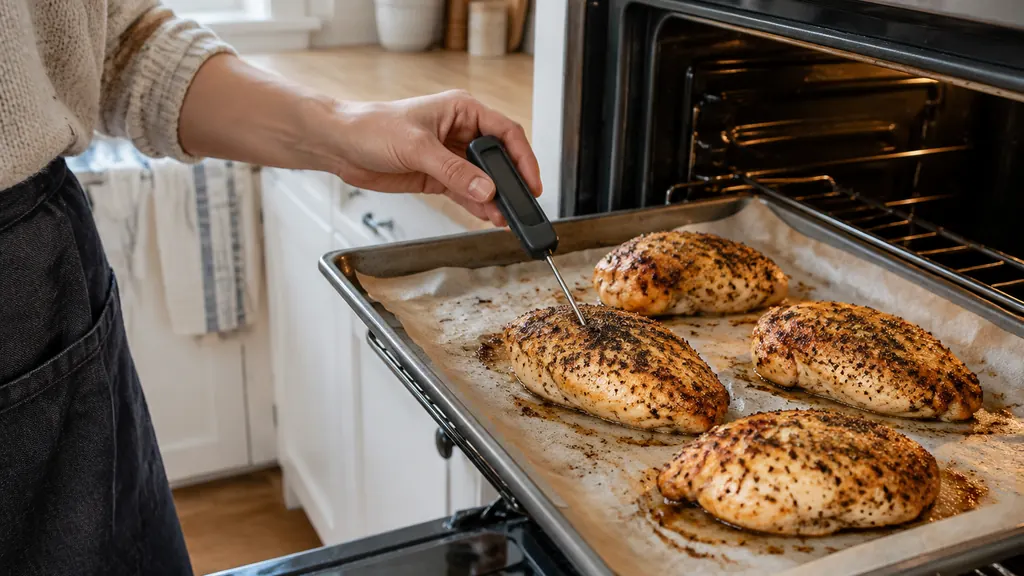
Check the center of the thickest section with a food thermometer. Insert the probe from the side, parallel to the cutting board, so it reaches the middle without passing through into the pan. Avoid touching bone or the pan itself, since both read hotter than the meat.
Let the meat rest before slicing so the juices have time to settle.
Choosing the Right Oven Temperature
Two approaches are common.
- High heat. Fast, with browned edges and a slightly firmer texture.
- Moderate heat. Slower and gentler, and useful for thicker breasts or when the oven is shared with a side dish.
Whichever you pick, preheat fully. An oven that has not reached temperature will stretch the cook time and dry out the surface before the center catches up. A simple oven thermometer hanging from a rack tells you what your appliance is actually doing, and it costs less than a single ruined dinner.
Step-by-Step: How to Bake Chicken Breasts in the Oven
- Preheat the oven and place a rack in the middle position.
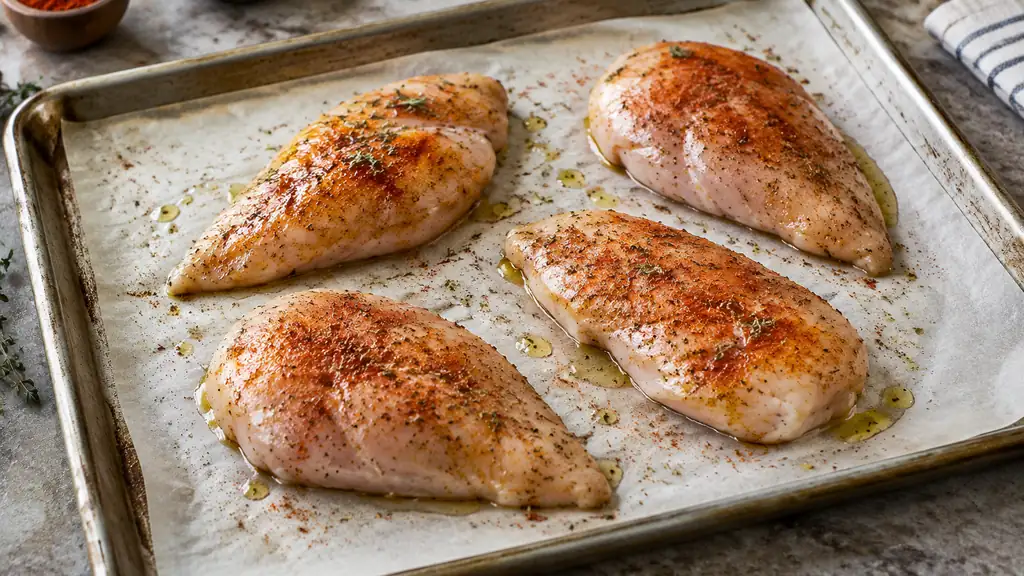
- Pat the breasts dry with paper towels. Surface moisture steams the meat instead of browning it.
- Coat lightly in oil and season on both sides with salt, pepper, and any dried herbs you like.
- Arrange on a sheet pan with space between each piece. Crowding traps steam.
- Roast until nearly done, then check with the thermometer.
- Check the thickest part with a food thermometer and move the meat to a cutting board when cooked through.
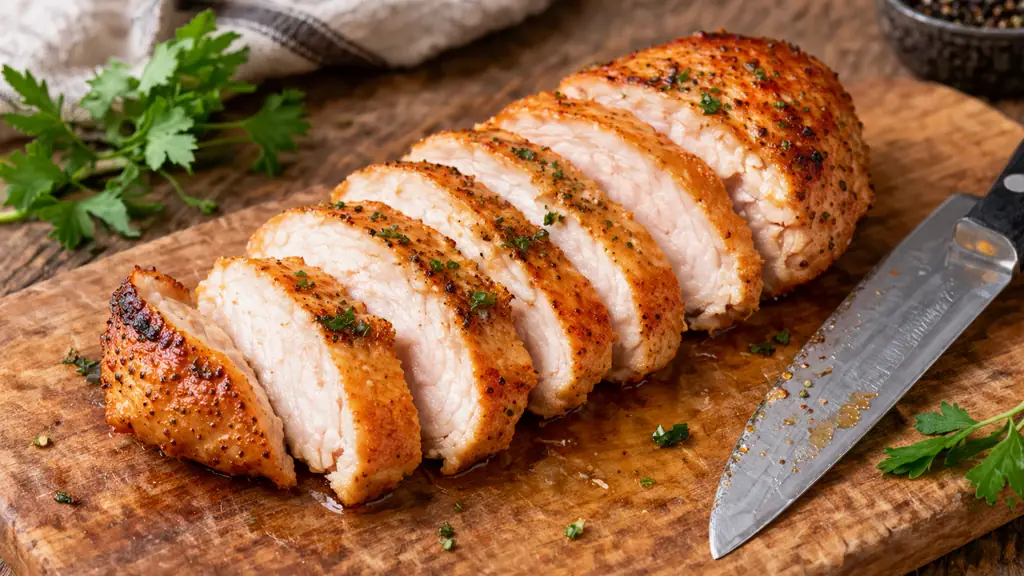
- Rest the meat, then slice against the grain.
Cooking time varies with thickness. Check very thick halves and thin cutlets with a thermometer as they cook.
If you pound the breasts to an even thickness first, they cook at the same rate and you stop guessing which piece is done. A zip-top bag and a rolling pin handle that job in under a minute.
Seasoning and Marinade Ideas
Salt is the one step worth doing ahead. A dry brine of kosher salt applied before baking seasons the meat. Skip it and you will still get a decent dinner, but the difference is noticeable.
From there, the flavor options are wide open:
- Smoked paprika, garlic powder, and onion powder for a barbecue-adjacent rub.
- Lemon zest, oregano, and olive oil for a Greek profile.
- Cumin, chili powder, and a squeeze of lime for taco night.
- Dijon, honey, and thyme for a glaze brushed on in the last few minutes.
Use an acidic marinade, such as citrus or vinegar, for a limited time because it can affect the meat’s surface. Oil-based marinades can also be used to season the chicken.
Leftovers are the quiet advantage here. Refrigerate cooked chicken promptly and use it within a safe storage period. Sliced chicken goes into salads, wraps, and grain bowls.
Common Mistakes That Dry Out Chicken
Overcooking by a few minutes. This is the big one. Chicken goes from juicy to dry fast once it passes the target temperature, so start checking early.
Skipping the rest. Cutting immediately releases the juices onto the board instead of keeping them in the meat.
Baking cold from the fridge. Take the breasts out when you are ready to cook them, and avoid leaving them at room temperature longer than necessary.
Using a pan that is too small. A crowded pan steams the meat. Use the largest sheet pan you own, or work in two batches.
Trusting the dial over the thermometer. The dial tells you what you asked for. The thermometer tells you what you got.
When to Reach for a Different Method
Baking is the default for a reason, but it is not always the answer. If you are feeding a crowd and want the meat to stay moist through a long hold, poaching or sous vide gives you more forgiveness. If you want char and smoke, a grill or cast iron skillet does that better.
For anyone tracking portions and calories, a plain baked breast is one of the easiest proteins to build meals around, and there are plenty of ways to keep it interesting across the week. If you are planning lighter dinners, these chicken healthy recipes for weight loss pair well with a simple baked breast.
Baked chicken also plays a supporting role in bigger dishes. Shredded or sliced, it folds into casseroles, pasta, and salads, and a creamy sauce can turn a plain weeknight breast into something that tastes like a restaurant plate. A good Chicken Cordon Bleu Sauce (Creamy Dijon Recipe) works over sliced baked chicken just as well as it does over the classic rolled version.
And when you want to use up leftover chicken in something with crunch, a crispy tortilla bowl for taco salad is a fun way to repurpose the protein without turning on the oven again.
Tools Worth Keeping on Hand
A digital instant-read thermometer is the single most useful purchase for this dish. Look for one that reads in a couple of seconds and is rated for the temperature range you cook in. Probe-style thermometers with a cable let you leave the probe in the meat and monitor from outside the oven, which is handy for thicker cuts.
Beyond that, a rimmed sheet pan, parchment paper, and a pair of tongs cover the whole process. If you bake chicken often, a second sheet pan means you can roast vegetables alongside without crowding either pan.
Baked Chicken Breast FAQ
What temperature should I bake chicken breasts at?
Recipes vary; many bake chicken breasts at temperatures in this range. Higher heat cooks faster and browns the surface, while moderate heat gives you a wider window before the meat dries out. Check the thickest part with a food thermometer to determine when the meat is cooked through.
How long do chicken breasts take in the oven?
Cooking time depends on the oven temperature and the breast’s thickness. Check the thickest part with a food thermometer as it cooks.
Do I need a food thermometer for chicken?
It is the only reliable way to know the meat is safely cooked without overcooking it. Color and juice clarity are unreliable indicators. An instant-read thermometer takes a few seconds and removes the guesswork entirely.
Can I bake chicken breasts from frozen?
Yes, but add significant time and expect a drier result. Thawing in the refrigerator overnight gives you better texture and more predictable timing. If you bake from frozen, use a moderate oven and check the center with a thermometer before serving.
Should I cover the pan with foil?
Foil traps steam and slows browning, so leave the pan uncovered for roasted results. Cover only if the surface is browning faster than the center is cooking, and remove it for the final few minutes.


No Comments