
One-Pan Chicken and Vegetables: A Weeknight Dinner Formula That Works
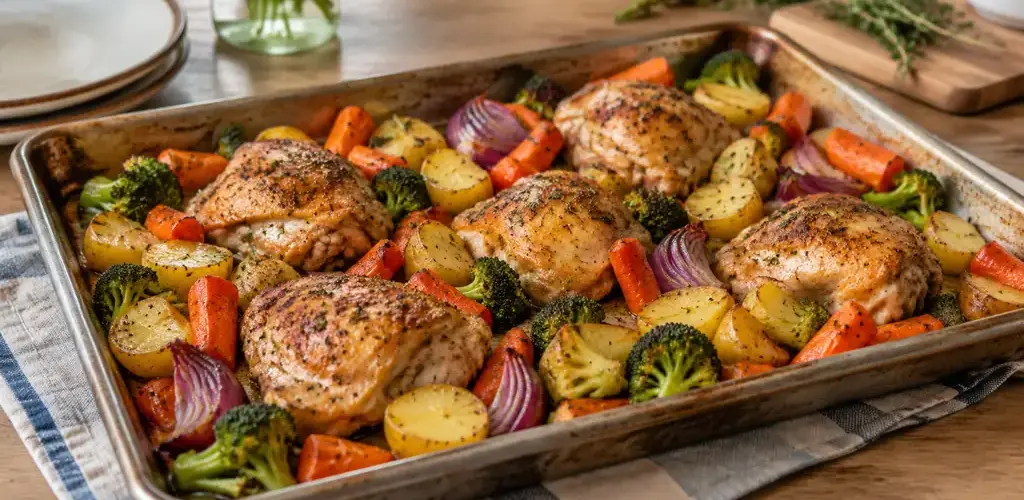
One-pan chicken and vegetables works when you treat it as a practical formula. Choose a pan that holds everything in a single layer, cut the vegetables so they finish at the same time as the chicken, season in layers, and roast hot enough to brown without steaming. Get those four decisions right and you can swap the bird, the vegetables and the spice mix every week without thinking about it.
Contents
- Why the One-Pan Formula Beats a Fixed Recipe
- Pick the Right Pan Before Anything Else
- Choose Chicken Cuts That Cook in the Same Window
- Cut Vegetables by Speed, Not by Habit
- Season in Layers and Finish With Acid
- The Main Procedure, Step by Step
- Temperatures and Food Safety That Actually Matter
- Timing Cheat Sheet for Common Combinations
- Mistakes That Ruin a One-Pan Dinner
- When to Change the Method
- One-Pan Chicken and Vegetables FAQ
Why the One-Pan Formula Beats a Fixed Recipe
A fixed recipe fails the moment your supermarket is out of green beans or your family dislikes zucchini. A formula survives substitutions because it describes relationships. A carrot chunk needs an appropriate size next to a chicken thigh, enough oil keeps a sheet pan from turning vegetables into a steamed puddle, and each piece needs space to brown.
That flexibility matters on a Tuesday in Ohio or a Sunday in Manchester, when the goal is a hot dinner with one tray to wash. The formula also makes shopping easier, because you can build the meal from whatever protein and produce is on offer and still land on something reliable.
The structure is always the same. A protein, a mix of quick and slow vegetables, a fat, an acid, a seasoning blend, and a hot oven. Change any single element and the method still holds.
Pick the Right Pan Before Anything Else
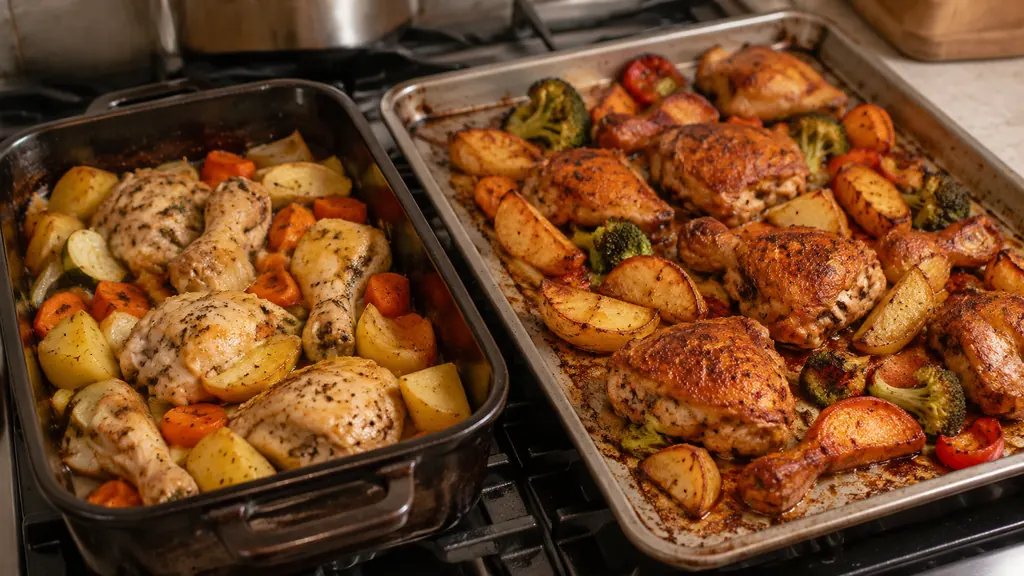
Pan choice decides the outcome more than any spice blend. A rimmed sheet pan gives you maximum surface area and airflow, so chicken skin and vegetable edges brown instead of softening. A deep roasting dish crowds the food and traps steam, which is fine for a braise but wrong for a crisp weeknight tray.
Use the largest pan that fits your oven with a little clearance on all sides. If the chicken and vegetables touch and overlap, split them between two pans. This gives the pieces room to roast. Half-empty space is not waste. It is the difference between roasted and soggy.
Line the pan with parchment or a silicone mat if you want a fast wash-up, but skip the liner when you want the deepest browning, since direct contact with hot metal browns better. Aluminium and stainless steel both conduct well. Glass dishes heat more slowly and are harder to get crisp results in.
Choose Chicken Cuts That Cook in the Same Window
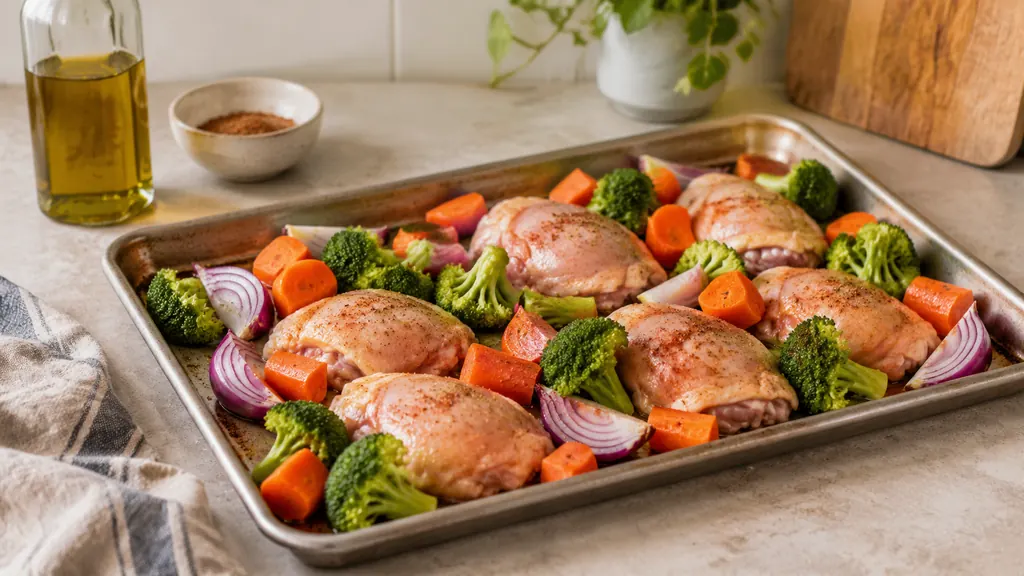
The chicken cut determines your timing, so pick it first and build the vegetables around it. Bone-in, skin-on thighs tolerate a long, hot roast and stay juicy. Boneless thighs cook faster and brown well. Breast meat dries out quickly and needs either a shorter time or a protective layer of skin, foil or a sauce.
For a weeknight tray, boneless thighs and drumsticks are the most forgiving. If you use breast, cut it into even pieces so no thick end overcooks while the thin end turns chalky. Chicken breast meat typically contains about 7-9% fat, according to Thermoworks, which is why it has less margin for error than a thigh.
Whatever cut you choose, pat the skin or surface dry with paper towel before oiling. Moisture on the surface has to evaporate before browning can begin, and a dry start buys you real colour.
Cut Vegetables by Speed, Not by Habit
Sort your vegetables into two groups. Slow vegetables such as potatoes, carrots, parsnips, butternut squash, onions and beets need a head start or a smaller cut. Quick vegetables such as broccoli, peppers, cherry tomatoes, green beans, asparagus and zucchini finish fast and should be added later or cut larger.
The rule of thumb is to match piece size to cooking speed. Cut dense roots into smaller chunks and leave softer vegetables in bigger pieces, so everything reaches tenderness at roughly the same moment. A carrot cut the same size as a broccoli floret will still be hard when the broccoli is mush.
Toss the slow group with oil and salt and give it a head start in the oven. Add the quick group partway through, or scatter it around the chicken later in the roast. This single step fixes most complaints about one-pan dinners.
Season in Layers and Finish With Acid
Seasoning a tray of chicken and vegetables properly means three passes. Salt the chicken first, ideally a little ahead of time, so the seasoning penetrates. Toss the vegetables with oil, salt and your spice blend in a bowl so every piece is coated. Then add a final flourish after roasting, when the food is hot and the aromatics will bloom.
Good blends for this method include smoked paprika with cumin, oregano with garlic, or a simple mix of black pepper, thyme and lemon zest. Keep salty ingredients such as soy sauce, olives or feta for the end, since they concentrate as moisture cooks off.
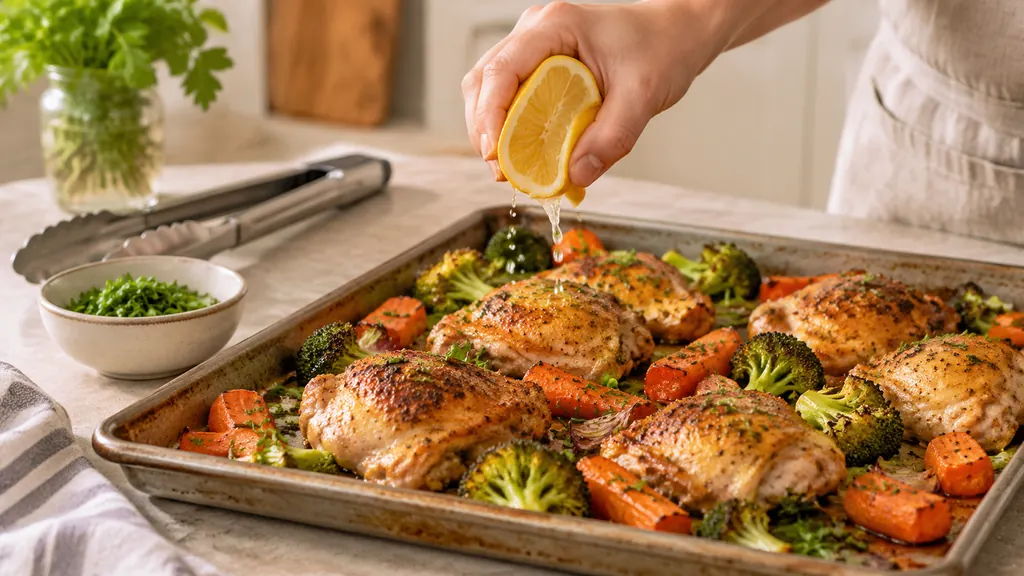
Acid is the step most home cooks skip. A squeeze of lemon, a splash of vinegar or a spoon of yoghurt at the end lifts the whole tray and cuts the richness of the chicken fat. Add it off the heat so the brightness stays sharp.
The Main Procedure, Step by Step
- Heat the oven to a high roasting setting and place a rimmed sheet pan inside while it warms.
- Pat the chicken dry, season it with salt and your spice blend, and let it sit while you prep the vegetables.
- Toss the slow vegetables with oil, salt and seasoning, then spread them on the hot pan.
- Nestle the chicken among the vegetables, skin side up, leaving space between pieces.
- Roast until the chicken is nearly done, then add the quick vegetables and return the pan to the oven.
- Check the chicken with an instant-read thermometer in the thickest part, away from bone.
- Rest the pan for a few minutes, then finish with acid, fresh herbs or a spoon of yoghurt.
That sequence is the whole formula. Everything else is variation.
Temperatures and Food Safety That Actually Matter
In the United States, chicken must reach a safe internal temperature of 165°F when measured with a food thermometer, according to the CDC. That is the number to cook to, and it applies to every cut on your tray. Measure the thickest part and avoid touching bone, which heats differently from meat.
Handwashing is part of the method and deserves attention. The CDC advises washing hands with soap and water for at least 20 seconds before and after handling raw chicken. Keep raw chicken away from the vegetables until they are on the pan, and use a separate board or wash it thoroughly afterwards.
Sink cleaning is a common trap. A USDA study cited by the CDC found that 1 in 7 people who cleaned their sink after washing raw chicken still had germs remaining. The practical answer is to avoid rinsing raw chicken at all, since splashing spreads bacteria around the kitchen.
Leftovers need attention too. The CDC advises refrigerating or freezing leftover cooked chicken within 2 hours. Spread leftovers in a shallow container so they cool quickly, and reheat them thoroughly the next day.
When frying, oil temperature matters. Thermoworks gives 350°F as the optimal oil temperature for frying chicken wings, hot enough to cook the meat through while crisping the skin. A thermometer takes the guesswork out of that too.
Timing Cheat Sheet for Common Combinations
Thin chicken cutlets and quick vegetables such as peppers and cherry tomatoes belong in a hot oven for a short roast. Bone-in thighs with potatoes and carrots need longer and a slightly lower heat so the roots soften before the skin burns.
A useful habit is to start the slow vegetables alone for a stretch, then add the chicken, then the quick vegetables near the end. That staggered approach works for almost any combination and removes the need to memorise times.
If you want a different shape of the same idea, this sheet pan chicken fajita recipe shows how peppers and onions behave on a hot tray. For nights when you want something lighter, these ground chicken dishes for lighter dinners use the same seasoning logic in a skillet. And if you already have cooked bird on hand, this plan for three meals from one rotisserie chicken stretches it across the week.
For a step-by-step version, the one-pan chicken and vegetables recipe on FromSue is worth a look. FromSue (fromsue.com) is a Russian home-cooking site with step-by-step family recipes.
Mistakes That Ruin a One-Pan Dinner
Crowding the pan is the most common error. When pieces overlap, moisture trapped between them turns roasting into steaming and you lose the browned edges that make the dish worth eating.
Cutting everything the same size is the second. Uniform chunks look tidy but ignore the fact that a potato and a tomato cook at completely different rates.
Skipping the preheat is the third. Putting food onto a cold pan means the chicken releases liquid before it sears, and the vegetables start in a puddle of fat and water.
Adding wet marinades too early is the fourth. Sugar-heavy sauces burn before the chicken is cooked through, so brush them on near the end or serve them on the side.
Finally, under-seasoning. A whole tray of food needs more salt than a single portion, and the seasoning has to reach every piece, not just the top.
When to Change the Method
Some situations call for a different approach. Very wet vegetables such as mushrooms and tomatoes release a lot of liquid, so roast them on a separate tray or add them late. Starchy potatoes benefit from a brief parboil if you want them really crisp.
If your oven runs cool or unevenly, rotate the pan halfway through and consider a slightly longer roast. An oven thermometer is a cheap fix that solves most timing complaints.
For a larger crowd, use two pans. A deep pan crowds the food and traps steam. The formula scales by surface area, not by depth.
One-Pan Chicken and Vegetables FAQ
What temperature should chicken reach in a one-pan dinner?
Chicken must reach a safe internal temperature of 165°F, measured with a food thermometer in the thickest part away from bone, according to the CDC. Check every piece rather than just the largest one.
Should I rinse raw chicken before roasting it?
No. Rinsing splashes bacteria around the sink and surrounding surfaces, and a USDA study cited by the CDC found that 1 in 7 people who cleaned their sink after washing raw chicken still had germs remaining. Pat the chicken dry with paper towel instead.
How long can cooked chicken sit out after dinner?
Leftover cooked chicken should be refrigerated or frozen within 2 hours, per the CDC. Spread it in a shallow container so it cools quickly, and reheat thoroughly before eating.
Can I use chicken breast instead of thighs?
Yes, but cut it into even pieces and watch the timing closely, because breast meat has less fat and dries out faster. Thermoworks notes that breast meat typically contains about 7-9% fat, which leaves little margin for overcooking.
Which vegetables should go on the pan first?
Dense roots such as carrots, potatoes and parsnips go on first, and quick vegetables such as broccoli, peppers and cherry tomatoes go on later. Matching cut size to cooking speed is what keeps everything tender at the same time.


No Comments