
Sheet Pan Chicken Fajita Recipe: Dinner in Half an Hour
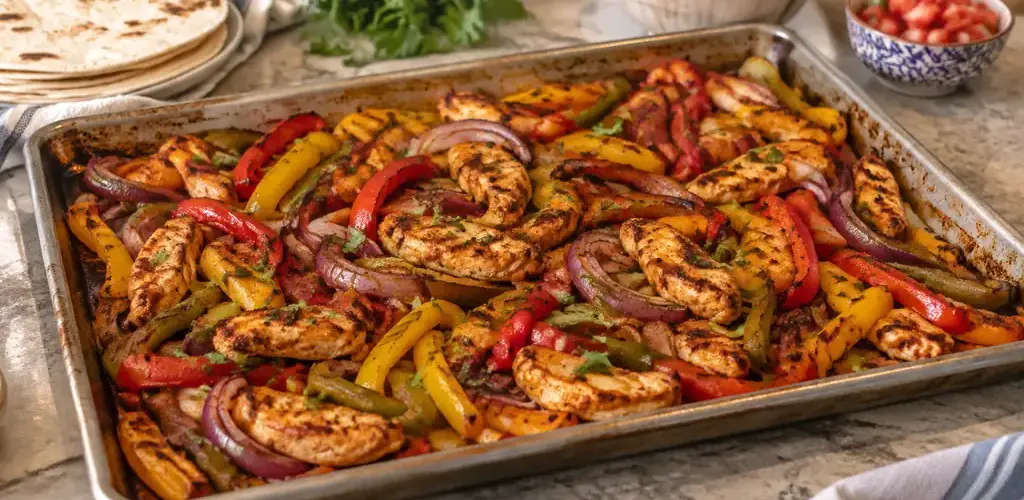
A sheet pan chicken fajita recipe gets dinner on the table in about 30 minutes. Toss the ingredients together, spread them on a pan, and roast at 400°F until the chicken is cooked through and the vegetables are tender. This guide covers the method, the spice blend, the common mistakes, and how to adapt the same pan for shrimp or a cowboy chicken variation.
Contents
- Why This Sheet Pan Method Works
- What You Need Before You Start
- The Spice Blend That Makes It Taste Like Fajitas
- Step-by-Step: How to Make Sheet Pan Chicken Fajitas
- How to Avoid the Common Mistakes
- Variations: Shrimp, Cowboy Chicken and More
- Serving Ideas and Toppings
- When to Call It a Day and Order Out
- Sheet Pan Chicken Fajitas FAQ
Why This Sheet Pan Method Works
The sheet pan does the work of a skillet and a grill at once. A hot oven surrounds the food on all sides, so the peppers soften and pick up browned edges while the chicken cooks through. You get fajita filling without standing over a stove, and the pan goes straight into the sink when you are done.
The method suits a weeknight because the prep is mostly chopping. Cut the chicken into strips, slice the peppers and onions, mix the seasoning, and toss everything together. The oven does the rest while you warm tortillas and set out toppings.
Fajita did not appear in print until 1971, according to the Oxford English Dictionary, and in southern Arizona the term was unknown except as a cut of meat until the 1990s. The sheet pan version is a modern shortcut to the same flavors.
What You Need Before You Start
Gather your tools and ingredients first so the assembly goes fast. You do not need special equipment, but a few items make the job easier.
- A rimmed sheet pan. Use a heavy half-sheet pan or a large rimmed baking sheet. A pan with low sides lets heat circulate and brown the edges. Line it with parchment or foil for easy cleanup.
- A sharp chef’s knife and a cutting board. You will cut chicken into strips and slice vegetables, so a sharp blade matters.
- Mixing bowls. One large bowl for tossing the chicken and vegetables, one small bowl for the spice mix.
- Tongs or a spatula. For stirring the pan halfway through cooking.
For ingredients, you need boneless skinless chicken breasts, bell peppers in a mix of colors, a yellow or red onion, cooking oil, and a spice blend. Tortillas, lime, cilantro, sour cream and salsa go on the table as toppings.
The Spice Blend That Makes It Taste Like Fajitas
The seasoning is where a plain chicken-and-pepper bake becomes a fajita. A good blend balances smoky, earthy and warm notes. Mix these in a small bowl before you start.
- Chili powder, the backbone of the blend
- Ground cumin, for the earthy depth
- Smoked paprika, for color and a campfire note
- Garlic powder and onion powder
- Dried oregano
- Salt and black pepper
- A pinch of cayenne or crushed red pepper for heat
Stir the spices together, then toss them with the oil-coated chicken and vegetables. Coating everything evenly is the goal. If you want a shortcut, a store-bought fajita or taco seasoning works, but check the label for salt content and adjust your own salt accordingly.
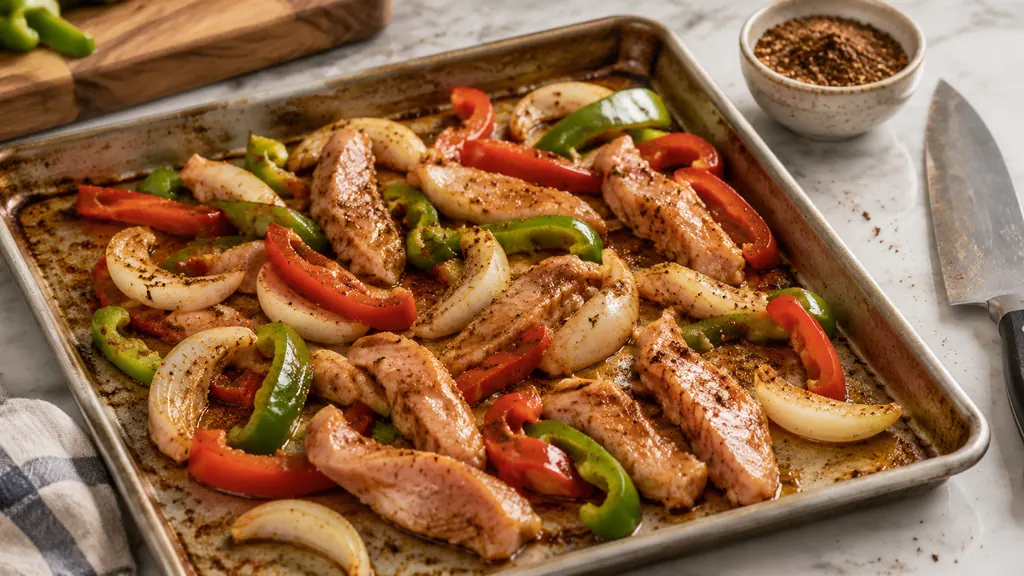
Step-by-Step: How to Make Sheet Pan Chicken Fajitas
Follow these steps to prepare the pan for baking.
- Heat the oven to 400°F. Set a rack in the middle position and let the oven come fully up to temperature before the pan goes in.
- Cut the chicken. Use boneless skinless chicken breasts cut into even strips. Pat them dry first so the oil and spices cling.
- Slice the vegetables. Cut bell peppers into strips and the onion into thin wedges. Keep the pieces similar in size so they cook evenly.
- Mix and toss. Whisk the spice blend in a small bowl. In a large bowl, toss the chicken and vegetables with oil, then sprinkle the spices over and toss again until everything is coated.
- Spread on the pan. Turn the mixture out onto the lined sheet pan and spread it in a single layer. Crowding the pan steams the food instead of roasting it, so use a large pan or two smaller ones.
- Bake until done. The fajitas are ready when the chicken is cooked through and the vegetables are tender.
- Stir halfway through. Move the outer pieces inward and the center pieces outward so everything browns evenly.
- Rest and serve. Let the pan sit for a few minutes, squeeze lime over the top, scatter cilantro, and serve with warm tortillas and your toppings.
How to Avoid the Common Mistakes
Most sheet pan fajita failures come down to moisture, crowding or timing. Fix these and the results improve immediately.
Wet chicken and vegetables. If the chicken is damp or the peppers are rinsed and still dripping, the spices slide off and the pan turns steamy. Pat everything dry with paper towels before tossing.
An overloaded pan. Piling the mixture deep in the pan traps moisture and the vegetables soften without browning. Spread it thin and use two pans if needed.
Uneven cuts. Thick chicken pieces and thin pepper strips finish at different times. Cut the chicken into even strips and keep the vegetables roughly uniform.
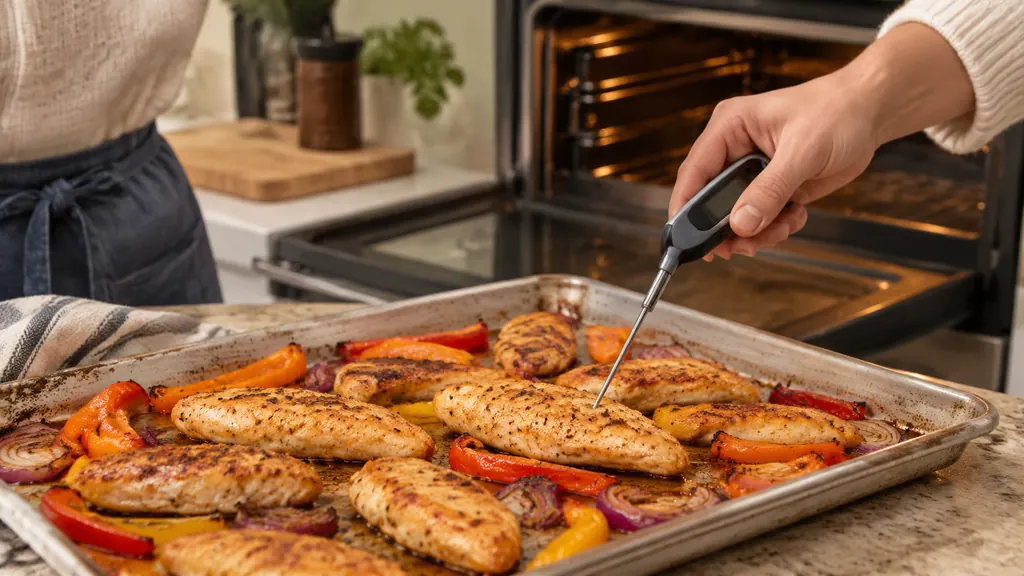
Overcooking the chicken. Start checking early and pull the pan as soon as the thickest piece is cooked through.
Skipping the stir. One stir halfway through moves the outer pieces inward and the cooler center pieces outward, so everything browns and cooks evenly.
Cold tortillas. Warm them in a dry skillet or a low oven while the fajitas bake. A cold tortilla makes a good filling feel flat.
Variations: Shrimp, Cowboy Chicken and More
The same pan format adapts to other proteins and flavors. Once you know the method, you can change the filling without changing the technique.
Shrimp fajitas. Shrimp cooks much faster than chicken, so the timing changes. Cook the vegetables first, then add the seasoned shrimp near the end of the bake. Pull the pan when the shrimp turn opaque and pink.
Cowboy chicken. This variation leans into smoky, hearty flavors. Use the same pan method with a rub built on smoked paprika, cumin and a little brown sugar, and serve with roasted peppers, onions and a drizzle of barbecue-style sauce. It is a good way to make the fajita pan feel new.
Steak fajitas. Thin-sliced flank or skirt steak works in the same pan, though it cooks faster than chicken breast. Check it early and pull it at medium.
Vegetarian fajitas. Swap the chicken for extra peppers, onions, zucchini and mushrooms. Add a can of drained black beans in the last few minutes of baking to warm them through.
Meal prep. Double the batch and portion the leftovers into containers.
If you like the sheet pan approach, the same one-pan thinking works for other chicken dinners. A crispy orange chicken recipe brings a takeout favorite into a home kitchen, and these chicken tenders baked, fried or air fried give you three ways to cook a family staple. When you want to stretch one bird across several meals, this plan for three meals from one rotisserie chicken saves both time and money.
Serving Ideas and Toppings
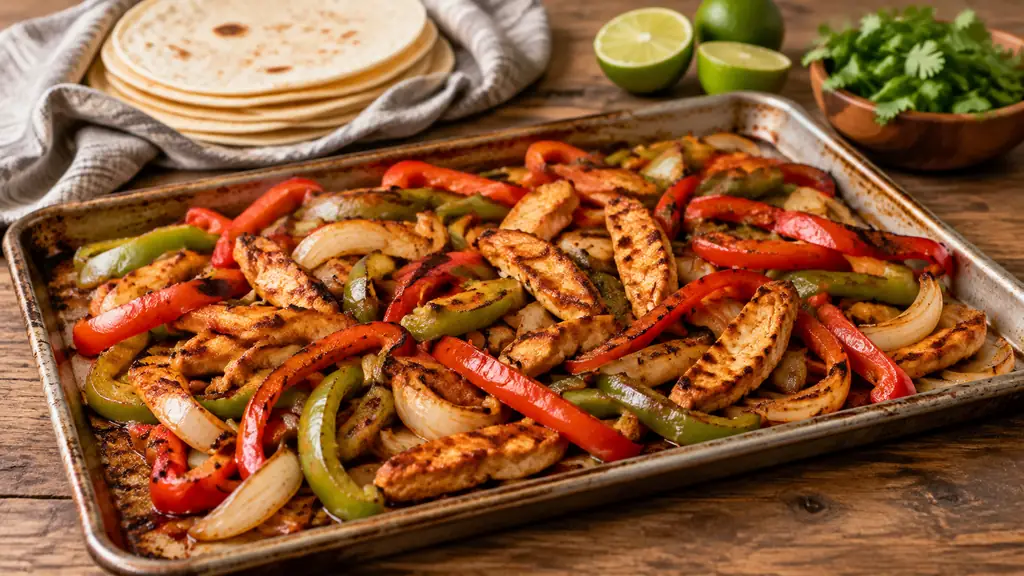
Warm tortillas and a spread of toppings let everyone build their own fajita at the table.
- Warm flour or corn tortillas
- Lime wedges for squeezing over the top
- Chopped fresh cilantro
- Sour cream or Mexican crema
- Shredded cheese or crumbled cotija
- Salsa, pico de gallo or a spoonful of guacamole
- Pickled jalapeños for heat
- A side of Mexican rice, black beans or a simple green salad
For a lighter plate, skip the tortilla and serve the filling over rice or lettuce. For a crowd, set the pan in the middle of the table with the toppings in bowls and let people serve themselves.
Reheat the filling in a skillet over medium heat so the edges crisp again, or microwave it in a covered bowl.
When to Call It a Day and Order Out
Some nights the oven plan falls apart. If you are missing a key ingredient, short on time, or the chicken is still frozen solid, a takeout fajita platter is a reasonable backup.
If your oven runs hot or cold, check it with an oven thermometer before trusting the temperature dial.
Sheet Pan Chicken Fajitas FAQ
How long do sheet pan chicken fajitas take to cook?
The fajitas are done when the chicken is cooked through and the vegetables are tender.
Can I make shrimp fajitas on the same pan?
Yes. Shrimp cooks much faster than chicken, so cook the vegetables first and add the seasoned shrimp near the end of the bake, pulling the pan when the shrimp turn opaque and pink.
Why did my fajitas come out soggy?
Soggy fajitas usually come from wet ingredients or an overcrowded pan. Pat the chicken and vegetables dry, toss them with oil and spices, and spread the mixture in a single layer so moisture can escape.


No Comments