
Baked Mac and Cheese Recipe With a Crunchy Top That Holds Up
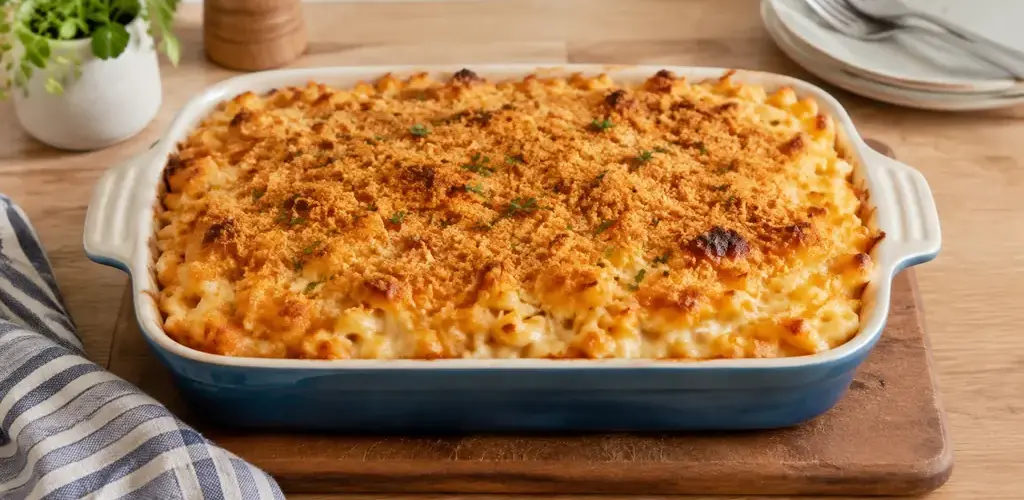
A baked mac and cheese recipe gets its crunch from a crumb layer added late and from a short, hot finish at the end of baking. You cook the pasta short of tender, keep the sauce looser than looks right, and scatter the buttered topping only once the middle is bubbling. The centre stays creamy and the top snaps when the spoon goes in.
Contents
Where the Crunch Actually Comes From
A crunchy top is a frying job done in an oven. Butter melts into the crumb, the oven drives water off the surface, and the starch browns into a crisp shell that stays rigid for a few minutes at the table. Anything wet between crumb and sauce softens that shell, which is why the topping goes on last and sits over a surface that is already hot.
Fresh crumbs torn from a stale loaf taste of the bread and brown fast, which makes them a good choice for anyone cooking in a Dutch oven where heat comes from every side. Crushed crackers or potato chips bring salt and fat and a fragile, splintery crunch that is best eaten straight away. A pure cheese crust, made by grating a hard cheese over the sauce, melts into a lacy sheet that sets hard as it cools.
The dish you bake in matters as much as the crumb. A shallow ceramic gratin dish exposes the most surface to dry oven air, and surface is where crunch lives. A cast-iron skillet holds heat so the sauce keeps moving under the topping, which helps on a buffet. Deep casseroles with straight sides look generous and give you a soft top, because the crumb sits far from the dry heat and close to the steam coming off the sauce.
Cheese Choices for the Sauce
Balance matters more than the exact list. A sauce built on a very young, soft cheese tastes of almost nothing and can break under heat, while one built only on a long-aged Cheddar tightens and leaks fat. Mix a flavouring cheese with a melting cheese and the sauce holds together. A pinch of mustard powder sharpens the flavour without announcing itself, and a bay leaf steeped in the milk adds depth.
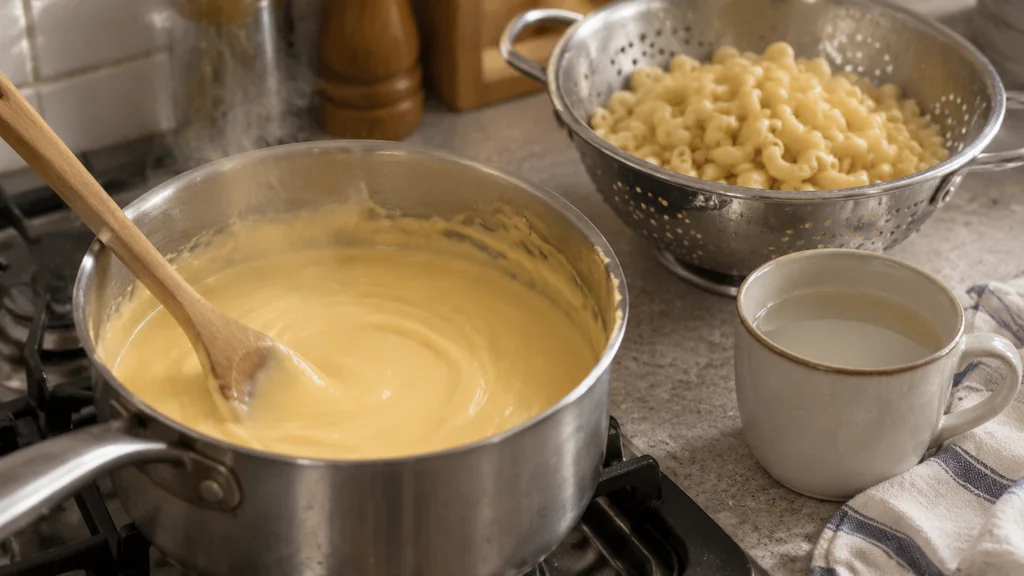
Build the sauce as a roux. Melt butter, whisk in flour, and cook the paste until it smells of toasted bread and stops foaming. Add warm milk in stages, whisking each addition smooth before the next one goes in, then simmer until the sauce coats a spoon in a thin film. Pull the pan off the heat before the cheese goes in, stir in the mustard powder and a grating of nutmeg, and let the residual heat do the melting.
Pasta Shape and the Undercook
Tubes and ridges hold sauce. Smooth shapes shed sauce onto the plate and leave the pasta tasting plain.
Salt the water until it tastes seasoned on its own, then follow the time on the pasta package and pull the pasta early. The centre should still show a chalky dot when you bite one. Pasta finishes cooking in the oven as it absorbs sauce, so a fully tender noodle at the colander stage turns to paste by the time the topping browns. Scoop out a mug of the cooking water before you drain, and do not rinse, since the starch on the surface is what helps the sauce cling.
The Method, Step by Step
- Heat the oven to a moderate setting and butter a shallow baking dish generously, corners included.
- Boil the pasta in well-salted water until short of tender, scoop out a mug of the water, and drain without rinsing.
- Make a roux with butter and flour and cook it until the raw flour smell is gone and the paste just begins to colour.
- Whisk in warm milk in stages, simmer until the sauce films the back of a spoon, then pull it off the heat and stir in the cheese, mustard powder and nutmeg.
- Loosen the sauce with the reserved pasta water, fold the pasta through, taste for salt, and scrape everything into the buttered dish.
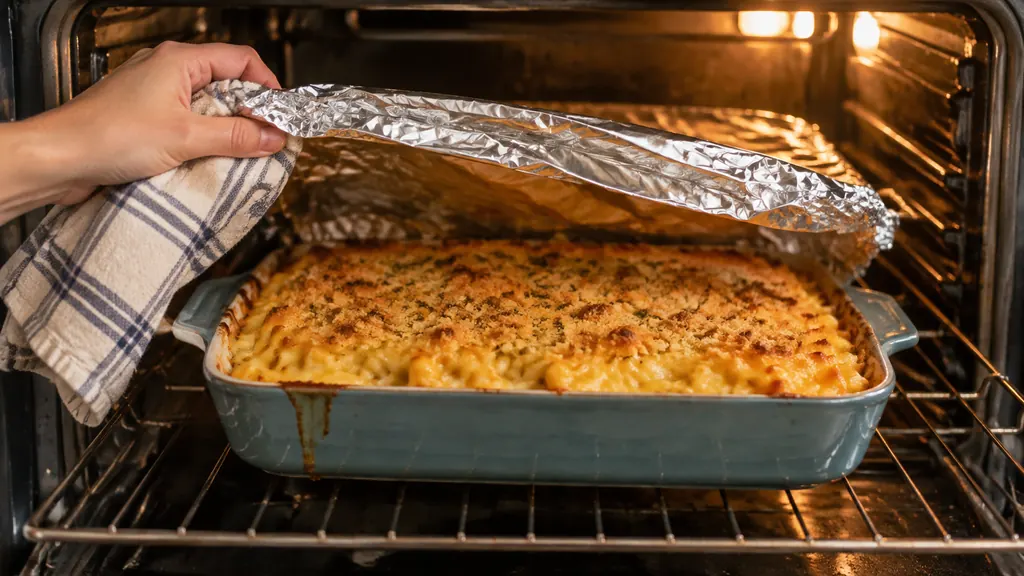
- Cover with foil and bake until the sauce bubbles at the edges and a knife tip pushed into the centre comes out hot.
- Toss the crumbs with melted butter and a grated hard cheese, scatter them over the top, and bake uncovered until the crumb is deep gold.
Building the Topping and Reading the Bake
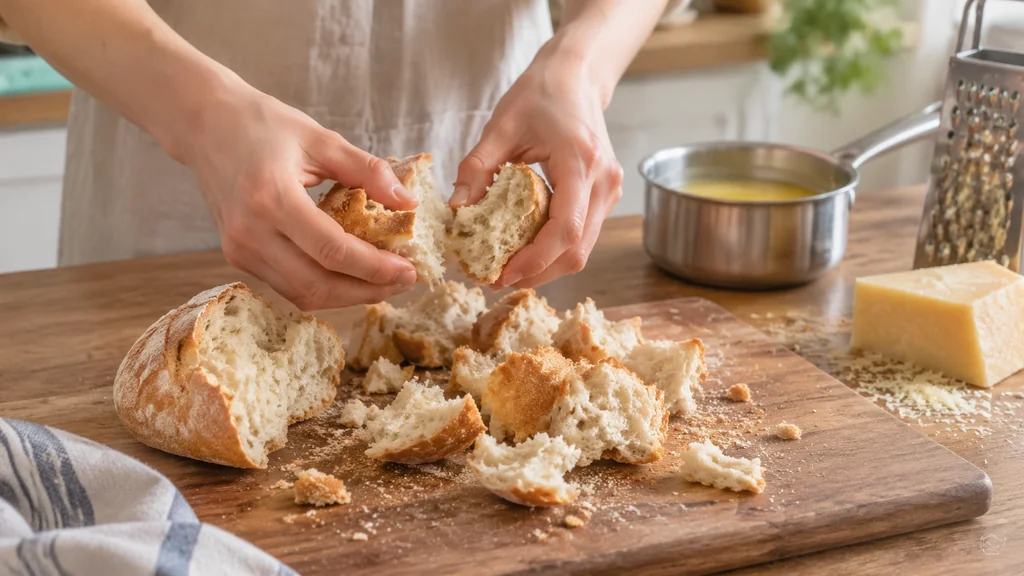
Tear fresh bread by hand and keep the pieces uneven, with some large and some fine, because a uniform texture reads as sand on the tongue. Toss the crumbs in melted butter until every piece is slick, then add salt, cracked pepper, a handful of grated Parmesan or aged Cheddar, and chopped thyme if you have it. The butter is doing the frying, so a dry crumb stays pale and tastes of nothing while a drowned one turns into a paste.
The covered stage is about heat reaching the middle. The uncovered stage is about the surface. Leave the foil on too long and the crumb steams when you finally pull it off, which is the most common way a good pan of pasta ends up with a soft top.
A broiler finishes the job faster than the oven’s own browning, and it also goes from gold to black faster than anything else in the kitchen. Stand at the door and watch it. Pull the dish when the crumb is the colour of a wheat field and the sauce bubbles thickly around the rim, then let it sit until the sauce settles before you cut into it. A spoonful taken straight from the oven runs everywhere.
Make Ahead, Reheat, and Leftovers
Assembled pasta and sauce keeps in the fridge, and the crumb stays in a covered jar on the counter until the oven is on, since a cold crumb clumps and never crisps properly. Make the sauce a touch looser when you plan to chill the dish, because cold pasta soaks up liquid as it waits.
Reheat the covered dish with a splash of milk until the middle is hot, then add the buttered crumb and finish uncovered. Individual ramekins and small skillets heat through faster and give every portion its own crisp rim, which is worth the extra washing up when you are cooking for two.
Leftovers lose their crunch, and that is fine, because a different dish takes over. Cut cold mac and cheese into slabs and fry them in a skillet with butter until the edges crust, or reheat a portion in a low oven with a spoonful of milk over the top. The cheese flavour is deeper on the second day.
Mistakes That Give You a Soggy Top
- The crumb going on at the start is the classic error, and it guarantees a soft top because the crumb absorbs steam for the whole bake.
- A sauce that is too thin pushes up through the topping and soaks it from below, while a sauce that is too thick sets before the middle is warm.
- Overcooked pasta keeps drinking liquid in the oven, so the dish dries at the edges and the centre turns starchy.
- A deep, narrow dish traps steam close to the crumb, and a cold dish straight from the fridge drops the oven temperature and stretches the bake.
- Foil left on until serving traps every bit of moisture the topping needs to shed.
- Skipping the salt in the pasta water leaves you with a bland dish that no amount of cheese fixes at the end.
Scaling for a Crowd and Filling the Table
Mac and cheese anchors a plate that can carry company, alongside Orange Chicken at Home for a second dish with a crisp coating. A sheet pan chicken fajita recipe gives you a second dish that finishes in the same oven on a weeknight when the cheese is already baking. A potluck spread often wants one more hearty dish on the side, and canned pork recipes fill that slot without needing oven space.
Baked Mac and Cheese FAQ
Why does baked mac and cheese come out dry?
The sauce went into the oven too tight and the pasta kept absorbing liquid as it baked. Cheese sauces thicken twice, once on the stove and again in the oven, so stop cooking the sauce while it still runs off a spoon in a slow ribbon and loosen it with the pasta water you saved.
What cheese gives the crispest topping?
A hard aged cheese such as Parmesan or an aged Cheddar gives the crispest top because it holds little water and browns into a lace that sets hard. Grate it finely over the buttered crumb so it melts into one sheet.
Should I cover the dish with foil?
Foil goes on for the first stage and comes off for the last. The covered stage heats the middle through without drying the crumb, and the uncovered stage at the finish is what turns the topping gold.
Can I top it with Panko?
Panko makes a lighter, shaggier crust that stays crisp longer than soft fresh crumbs and browns evenly. Fresh crumbs taste more of bread and catch faster, so watch them closely under the broiler.
Can I assemble baked mac and cheese ahead of time?
Assemble the pasta and sauce in the buttered dish and refrigerate it, keeping the crumb in a covered jar until the oven is on. A cold dish takes longer to heat through, so give the covered stage extra time and test the centre with a knife tip.


No Comments