
Green Bean Casserole from Scratch with Fresh Green Beans
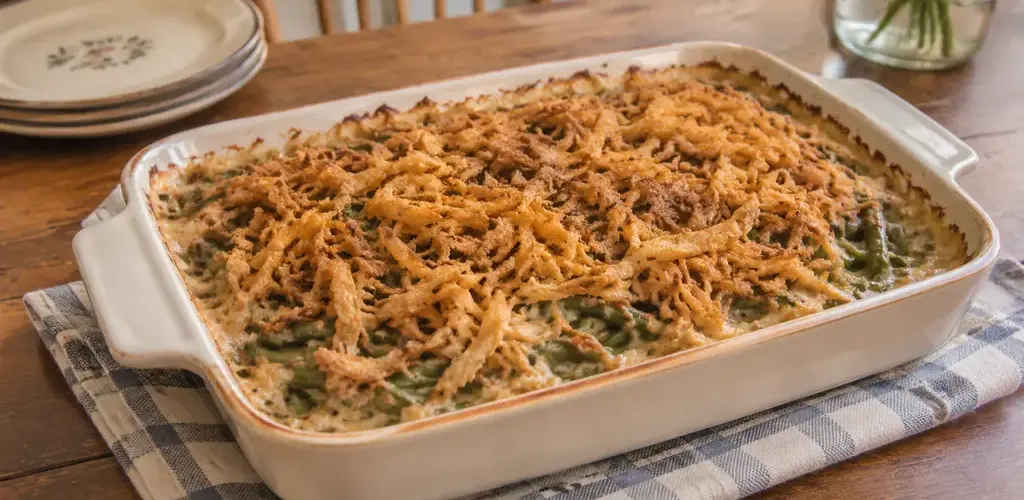
Green bean casserole from scratch means building the dish in three parts: blanched fresh green beans, a mushroom sauce made in a skillet with a roux, and a topping of onions fried at home. It takes about an hour of hands-on work and no canned soup, and the result holds its texture better than a canned-soup version.
The dish is American home cooking at its most practical. It became a staple of American holiday tables, and by now nearly every family has a version. Making it from scratch is less about nostalgia and more about control. You decide how crisp the beans stay, how thick the sauce is, and how dark the onions get.
Contents
Why fresh green beans beat the canned version
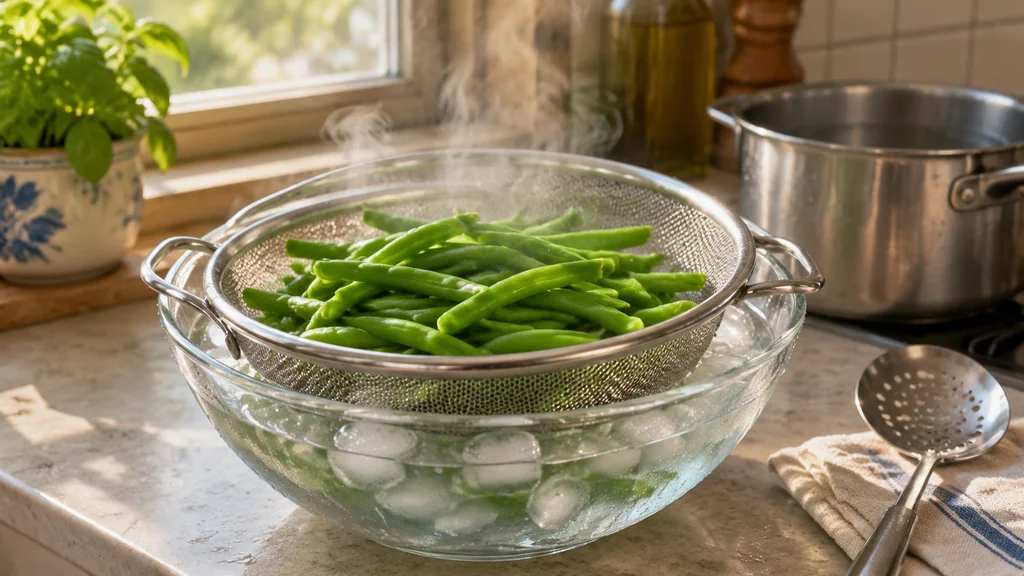
Canned green beans are already cooked through when they go into the can, so a second bake turns them soft and grey. Fresh green beans, sometimes sold as French beans or string beans, keep a snap if you blanch them briefly and stop the cooking in ice water. That single step is the difference between a casserole with texture and one that eats like porridge.
The sauce matters just as much. Condensed mushroom soup brings a lot of salt and a stabilised starch that thins out under heat. A roux of butter and flour, loosened with milk or stock and finished with sautéed mushrooms, thickens reliably and tastes of actual mushrooms. If you already enjoy building a cheese sauce from a roux, the technique in this guide to choosing cheeses for macaroni and cheese will feel familiar, because the base is the same.
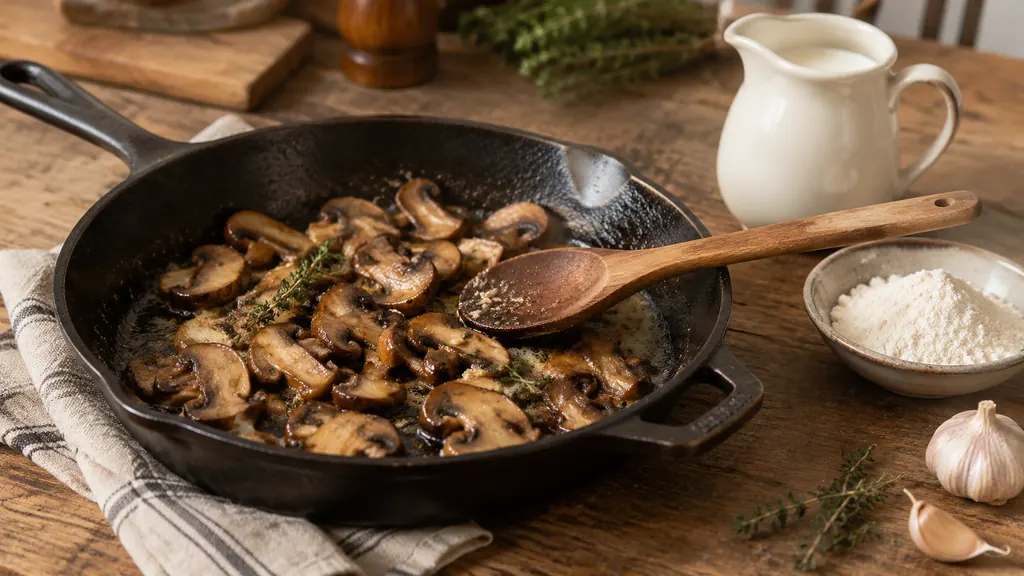
Fresh mushrooms are the third pillar. White button mushrooms work fine, and cremini give a deeper flavour. Slice them and cook them hard in a dry pan first so they release their water and brown, then add fat. Mushrooms that go straight into butter steam instead of searing, and the sauce ends up tasting flat.
One more reason to skip the can. You can season a homemade sauce at the end, after tasting, rather than guessing at what the soup already contains. That matters if you are cooking for people watching their salt.
The tools and ingredients that actually matter
You do not need special equipment, but a few pieces make the job easier. A wide skillet gives mushrooms room to brown instead of steam. A heavy saucepan holds heat for the roux. A large pot for blanching and a bowl of ice water complete the setup. For the onions, a Dutch oven or a deep cast-iron pan holds oil safely, and a thermometer clipped to the side keeps the temperature steady.
On the ingredient side, here is what the dish needs.
- Fresh green beans, trimmed and cut into short lengths
- White or cremini mushrooms
- Unsalted butter and all-purpose flour for the roux
- Whole milk, half-and-half, or a mix of milk and stock
- Yellow onion, sliced thin, for the topping
- Buttermilk or an egg for the onion coating
- Flour, plus a little cornstarch, for dredging the onions
- Salt, black pepper, garlic, and a grating of nutmeg
- Neutral oil for frying
Two small upgrades are worth the money. Fresh thyme, added to the sauce at the end, lifts the whole dish. A splash of dry sherry or white wine in the mushroom pan adds depth that stock alone cannot. Neither is required, and neither should dominate.
For the frying oil, choose something with a high smoke point. Peanut oil and refined canola both hold up. Olive oil does not, and it will taste of itself on the onions.
How to make green bean casserole from scratch
The order below keeps everything moving. Fry the onions first, because they hold at room temperature while you build the rest. Blanch the beans while the oil heats. Make the sauce last so it goes into the dish warm.
- Fry the onions. Slice a yellow onion thinly, toss the slices in buttermilk, then dredge in a mixture of flour, cornstarch, salt and pepper. Fry in neutral oil at moderate heat until deep golden, working in small batches so the temperature does not drop. Drain on a rack, not paper, so they stay crisp.
- Blanch the green beans. Boil them in well-salted water until just tender but still firm, then transfer straight to ice water. Drain and dry them thoroughly. Wet beans water down the sauce.
- Brown the mushrooms. Cook sliced mushrooms in a dry skillet over high heat until their liquid evaporates and they start to colour. Add butter, garlic and thyme, and cook a minute more.
- Build the roux. Sprinkle flour over the mushrooms and butter, stir to coat, and cook until the raw flour smell disappears. Pour in the milk gradually, whisking, and simmer until the sauce coats a spoon.
- Season and combine. Taste the sauce, then adjust salt, pepper and nutmeg. Fold in the drained beans and spread everything in a baking dish.
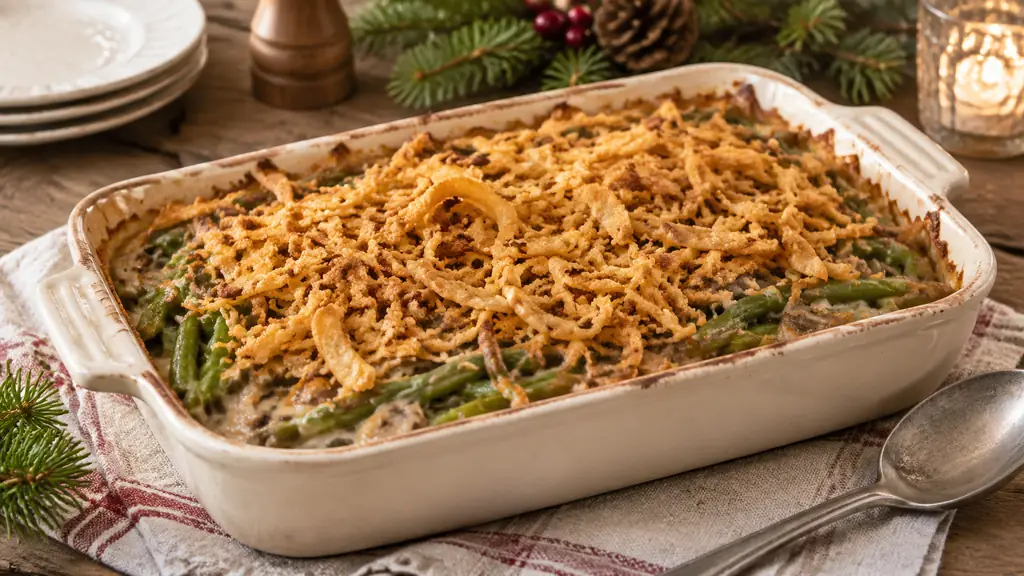
- Bake, then top. Bake until the sauce bubbles at the edges, then scatter the fried onions over the top and return the dish to the oven briefly to warm them through. Adding the onions at the end keeps them crunchy.
If you would rather not fry at all, the same onion slices can be tossed in a little oil and baked on a sheet pan until crisp. They will not match the fried version, but they are a reasonable substitute and free up the stove.
Timing, costs and feeding a crowd
A from-scratch casserole costs more in time than in money. Fresh beans, mushrooms, dairy, flour and onions are all inexpensive, and the only real expense is oil for frying, which you can strain and reuse a couple of times. Compared with buying canned soup, canned beans and a tub of fried onions, the homemade version usually comes out close on price and well ahead on flavour. Exact costs swing with the season and your region, so check the produce prices where you shop.
Time breaks down roughly like this. Trimming and blanching the beans is quick work. Frying onions takes the longest, and it cannot be rushed. The sauce comes together in the time it takes the oven to heat. Total hands-on time lands near an hour for a standard batch, and the dish can be assembled ahead and refrigerated overnight before baking.
For a larger gathering, double the sauce and beans but fry the onions in two batches. A single crowded pan drops the oil temperature and gives you pale, greasy onions. If you are already planning a holiday table, the same logic of cooking components separately and combining at the end applies to the sheet-pan approach in this one-pan chicken and vegetables formula, where spacing and heat control do most of the work.
Make-ahead notes are simple. Blanch the beans a day ahead and keep them dry in the fridge. Fry the onions a day ahead and store them uncovered at room temperature, never sealed in a container where they will soften. Assemble the casserole with the sauce and beans, refrigerate, and add the onions only at the end of baking.
Topping options and variations
The fried onion topping is traditional, but it is not the only way to finish the dish. A buttered breadcrumb layer, toasted in a skillet with a little garlic, gives a crunchy top that holds up well and skips the frying entirely. Crushed potato chips work in a pinch. So does a mixture of panko and grated Parmesan.
The sauce is where variation pays off. A spoonful of Dijon mustard sharpens the mushroom flavour without announcing itself. A little cream cheese stirred in at the end makes the sauce richer and more spoonable. Smoked paprika adds warmth. If you want a version closer to a gratin, top the beans with the sauce and a layer of grated Gruyère or sharp cheddar before baking, and finish under the broiler. The principles in this baked mac and cheese with a crunchy top apply here too, since a topping only stays crisp when the layer beneath it is thick enough to shield it from steam.
Vegetarian cooks should check the stock label, since some commercial stocks contain chicken. Gluten-free bakers can swap the flour in the sauce for a gluten-free blend, though the roux will need a little more fat to come together. For the onion dredge, cornstarch alone gives a lighter, crispier crust than flour.
Common mistakes and how to avoid them
The most frequent failure is overcooked beans. Blanching them until soft and then baking them again guarantees mush. Pull them from the boiling water while they still have bite.
The second is a thin sauce. A roux needs to cook long enough for the flour to lose its raw taste, and the liquid must go in gradually. If the sauce looks loose after simmering, keep it on the heat a little longer rather than adding more flour, which will taste pasty.
The third is soggy onions. Fried onions go on at the very end, after the casserole has finished baking. If you add them at the start, they absorb moisture and turn soft.
A fourth mistake is under-seasoning. The sauce tastes milder after baking, so season it slightly more boldly than seems right when you taste it from the pan. A grating of nutmeg and a generous grind of black pepper do a lot of quiet work.
Finally, do not skip drying the beans. Water clinging to the beans thins the sauce and leaves a puddle at the bottom of the dish.
When to call it a day and buy help
Nobody expects you to fry onions from scratch on a weeknight. If time is short, buy a tub of prepared fried onions and make the sauce and beans yourself. That shortcut keeps most of the flavour and saves the messiest step. Canned or frozen beans are acceptable in a pinch if you drain and dry them well, though the texture will be softer.
If you are cooking for a crowd and the oven is already full, assemble the casserole in a dish that fits alongside the roast, and bake it at whatever temperature the oven is running. A moderate oven works fine; you are heating the dish through and bubbling the sauce, not baking a cake. Check the centre with a knife to be sure it is hot.
For anyone with allergies or dietary restrictions, read the labels on stock, dairy and any prepared onions. Local rules on food labelling vary, so check the label if you are cooking for someone with a serious allergy.
Green Bean Casserole FAQ
Do I have to blanch the green beans first?
Yes, blanching is the step that keeps fresh beans firm through baking. Boil them briefly in salted water, then plunge them into ice water to stop the cooking. Skipping it leaves the beans raw-tasting in the middle while the outside softens.
Can I make green bean casserole ahead of time?
You can assemble the beans and sauce a day ahead and refrigerate the dish covered. Fry the onions separately and store them uncovered at room temperature. Bake the casserole, then add the onions at the end so they stay crisp.
Why did my sauce turn out lumpy?
Lumps come from adding liquid too fast to a hot roux. Pour the milk in a slow stream while whisking constantly, and the sauce will come together smooth. If lumps do form, whisk hard off the heat or push the sauce through a sieve.
Can I use frozen green beans instead of fresh?
Frozen beans work if you thaw and drain them thoroughly before folding them into the sauce. They are already blanched, so skip that step. Expect a slightly softer texture than fresh beans give you.
How do I keep the fried onions crispy?
Add them after the casserole has finished baking, just before serving. Onions added at the start absorb steam from the sauce and go soft. If you are reheating leftovers, add a fresh handful of onions on top.


No Comments